 Slovenčina
  English
Co-authored by Sheikh Al Mahfoudh bin Bayyah, Ján Figeľ
For our positive and constructive coexistence in the world of diverse nations and communities, peace is a cornerstone. True and lasting peace is a fruit of justice. The core of justice is based on the respect of fundamental human rights. The most central among these rights is freedom of religion or belief (FoRB). Why? Because it is a litmus test of all other rights. When this one is respected, other rights and freedoms have chance to be respected as well. And vice versa. FoRB has private and public dimension; it concerns lives of individuals and communities alike. FoRB covers various forms – worship, practice, observance, teaching… If FoRB is violated, the same happens to other rights and freedoms as well. The crime of crimes is a genocide, coming after intolerance, discrimination and persecution. In many regions of the world religious or ethnic minorities suffer. Nine out of ten genocides in worldwide history were aimed against religious minorities or based on religious identity.
FoRB is the deepest expression and measure of personal freedom. It is defined by international law as freedom of thought, conscience and religion. This is triune expression of human rationality, morality and spirituality – religiosity. If this deepest internal freedom is disregarded, then subsequent external freedoms are disrespected even more: e.g. freedom of opinion, expression, media, association, assembly, ownership… Democracy and wellbeing of people begin here. Autocracy or totalitarianism starts by abuse of FoRB for all.
Due to indivisible unity and importance of everyone’s rationality, morality and spirituality, there is a deep and strong nexus between FoRB and human dignity. And dignity is the foundational principle of human rights. Dignity is a fact from which our rights and duties are derived.
Today, the agenda of human rights is hijacked by various groups representing ideologies, violent extremism or ethical relativism. We also tend to forget or neglect our human duties towards the other and towards society.
In order to make our era more humane, we must return to the original meaning of key documents, principles and definitions on this subject.
1) There is a strong and deep nexus between human dignity of all and freedom of religion or belief (FoRB) for all
Following are four basic sources that articulate the priority of human dignity – two secular documents, and two faith inspired documents:
a) Universal Declaration of Human Rights (1948)
Preamble: “Whereas recognition of theinherent dignity and of the equal and inalienable rights of all members of the human family is the foundation of freedom, justice and peace in the world, …
Article 1
All human beings are born free and equal in dignity and rights. They are endowed with reason and conscience and should act towards one another in a spirit of brotherhood.”
b) The European Union Charter of Fundamental Rights (2000)
It recognizes dignity as the first founding value of the Union and respects and protects dignity in the Article 1 of Chapter 1.
c) Vatican II Council Declaration on Religious Freedom “Dignitatis Humanae” (1965)
“The Council… declares that the right to religious freedom has its foundation in the very dignity of the human person.“
d) The Marrakesh Declaration on the Rights of Religious Minorities in Muslim Majority Lands (2016)
“God bestowed dignity on all human beings regardless of their race, color, language or belief… This dignity requires that human beings must be granted freedom of choice. … All people – regardless of their different natures, societies, and worldviews – share the bonds of brotherhood and sisterhood in humanity.”
2. Respect of human dignity is a meeting point for religious and secular humanists
The convergence of different traditions and concepts leads from a common ground to a common good.The Biblical, Judeo-Christian tradition states that mankind is created in the likeness and image of God. Christian faith proclaims, that God became a man and uplifted humans to become heirs of heaven. Karamah (in Arabic) in Islam has Quranic roots, when angels are asked to bow in front of Adam, the first man.
Dignity is the highest worthiness that each person possesses and therefore transcends the whole material world. Each human being is a person: a unique being with intellectual, spiritual and material dimensions. Only a person can have rights and duties. A person is always a subject with reason, conscience and freedom.
3. Rights cannot work without duties
The dignity of each person represents a balance and interdependence of rights and duties, freedom and responsibility. Freedom without responsibility cannot thrive. My dignity is a call for my duties – as father, husband, neighbor, citizen. Therefore, we should promote awareness and active respect of human duties. A culture of human dignity brings together two ancient ethical rules.
The Silver Rule: “What you do not wish done to you, do not do to others.” This is the basis of justice, reciprocity, tolerance, equal treatment. And the Golden Rule: “Do unto others as you would have them do unto you”. It is a source of compassion, acceptance, solidarity, charity and love.
4) Equal citizenship as a fruit of equal dignity
Equal dignity as a moral principle has a socio-political implication: equal, fair, inclusive, dignified citizenship. In dignity we are ALL EQUAL. In identity we are ALL DIFFERENT (people of the past, presence, future). This is not a problem; this is the principle of creativity (in opposition to copying or cloning).
5) Dignity is the best theme for learning how to live together, not merely to exist together
Reason and faith, science and religion in quest for truth, working for common good of people, can drive our civilization forward. Dignity is a daily learning process through which we discover what it means to be human in every situation. It is the best permanent lesson on rights, responsibilities and reciprocity.
Respect of dignity of all and promotion of dignity for all is the best road to lasting peace and dignified life in our times.
When we defend FoRB for all, at the same time it is necessary to remember the other side of the same coin: Responsibility of religious communities and leaders to promote dignity of all and actively pursue shared responsibility for living together in peace, security and shared development in the world which is growingly diverse, but one. Our freedom and dignified life cannot survive without our responsibility.

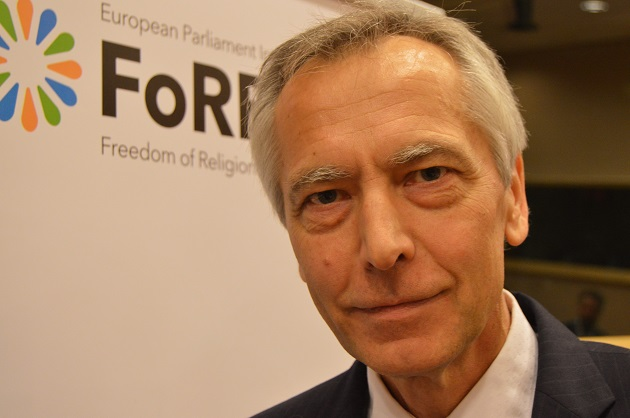
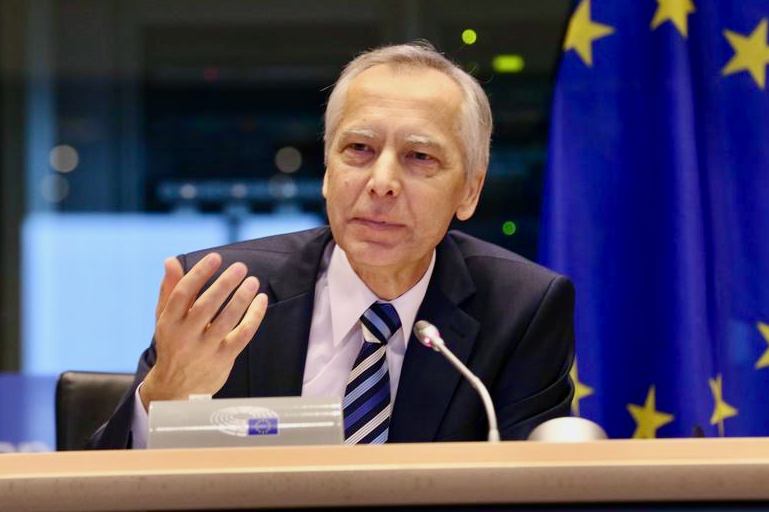
Ján Figeľ, is the President of the FOREF EUROPE, former EU Commissioner, the first Special Envoy for FoRB outside the EU. He initiated the Declaration on Human Dignity for Everyone Everywhere www.dignityforeveryone.org

Sheikh Al Mahfoudh bin Bayyah, Secretary General of The Abu Dhabi Forum for Peace, UAE
Podobné články
 Syrian religious leaders in Brussels: “We want to live in our land, we don’t want to leave”
 Campaigner: Religious freedom envoy must be permanent part of EU’s foreign policy team
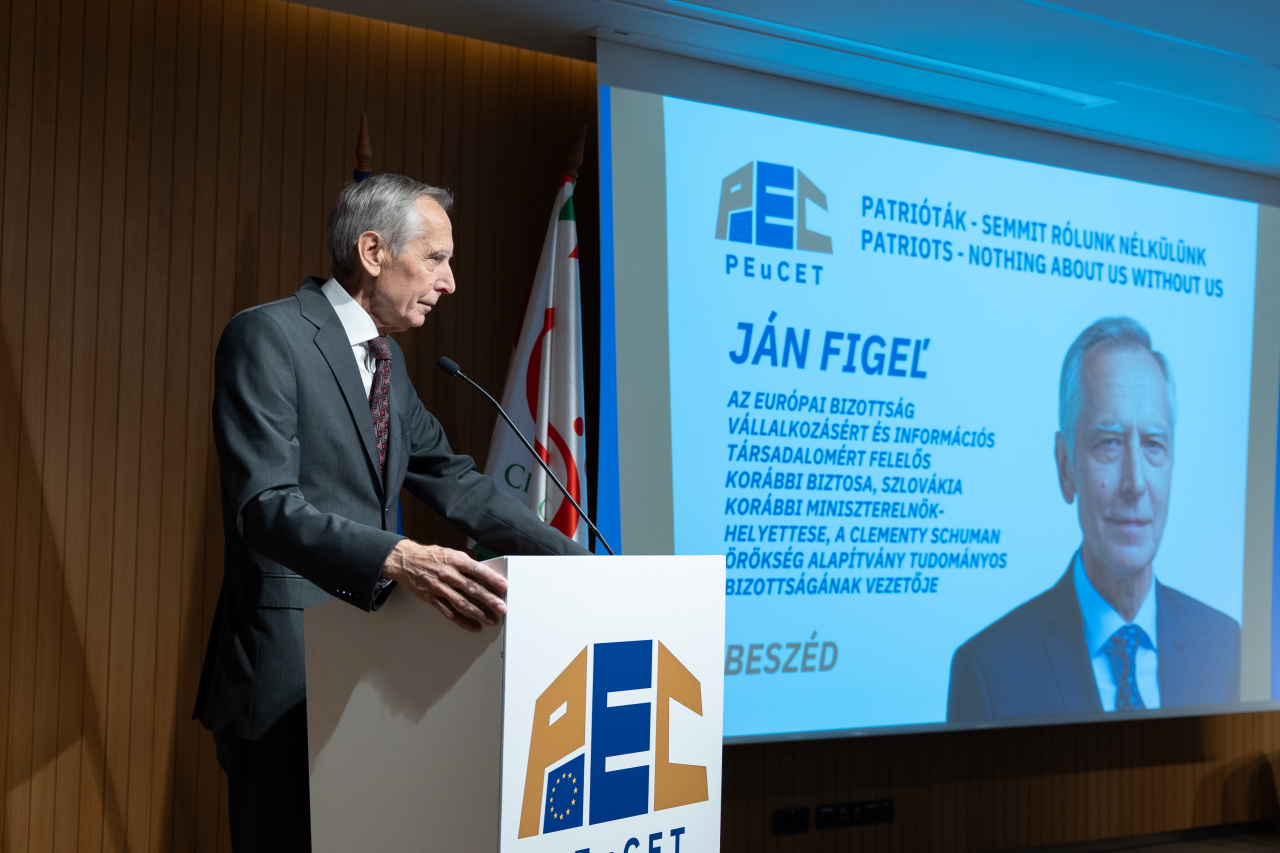
 Ján Figeľ – Speech at the ‘Europa Karpat’ Conference in 2025
 Applicant’s Reply to the Observations of the Government of the Slovak Republic
 Ján Figeľ: Respect of Human Dignity as a Road to Peace
 European Court Dismisses Challenge to Slovakia’s COVID Worship Bans