 English
  Slovenčina
 Estonia is used to being considered a state of almost exemplary European precision.
Why Estonia’s dispute with the Orthodox Church concerns the whole of Europe
Estonia is used to being considered a state of almost exemplary European precision. Precise rules, transparent procedures and clearly defined boundaries of what is permissible are valued here. At the same time, special attention is paid here to everything that could be related to Russian influence. After Russia’s attack on Ukraine, this vigilance has become even more pronounced. There is nothing surprising in this: the country has its own history, its own concerns and, ultimately, an indisputable right to take care of its own security.
However, precision also has a dangerous property: a wrong starting point, once adopted, can lead step by step to where it was originally not supposed to go at all. In my opinion, this is exactly what is happening today in Estonia, where the fight against Russian influence has gradually turned into pressure on the Orthodox Church, and issues of national security have begun to inconspicuously intertwine with issues of faith, canonical order, and church jurisdiction.
And this is no longer an internal matter of one small Baltic country. It is an issue where contemporary Europe draws the line between the right of a state to protect its security and the right of an individual to freely decide what they believe in and which church they belong to. The Convention for the Protection of Human Rights and Fundamental Freedoms is the most important international human rights treaty on the European continent, which ensures respect for the most important human rights and at the same time contains an institutional framework (the European Court of Human Rights). Religious freedom is guaranteed in Article 9 of the Convention. It was created on the territory of the Council of Europe in 1950. When joining the Council of Europe, all member states, including Estonia, signed it.
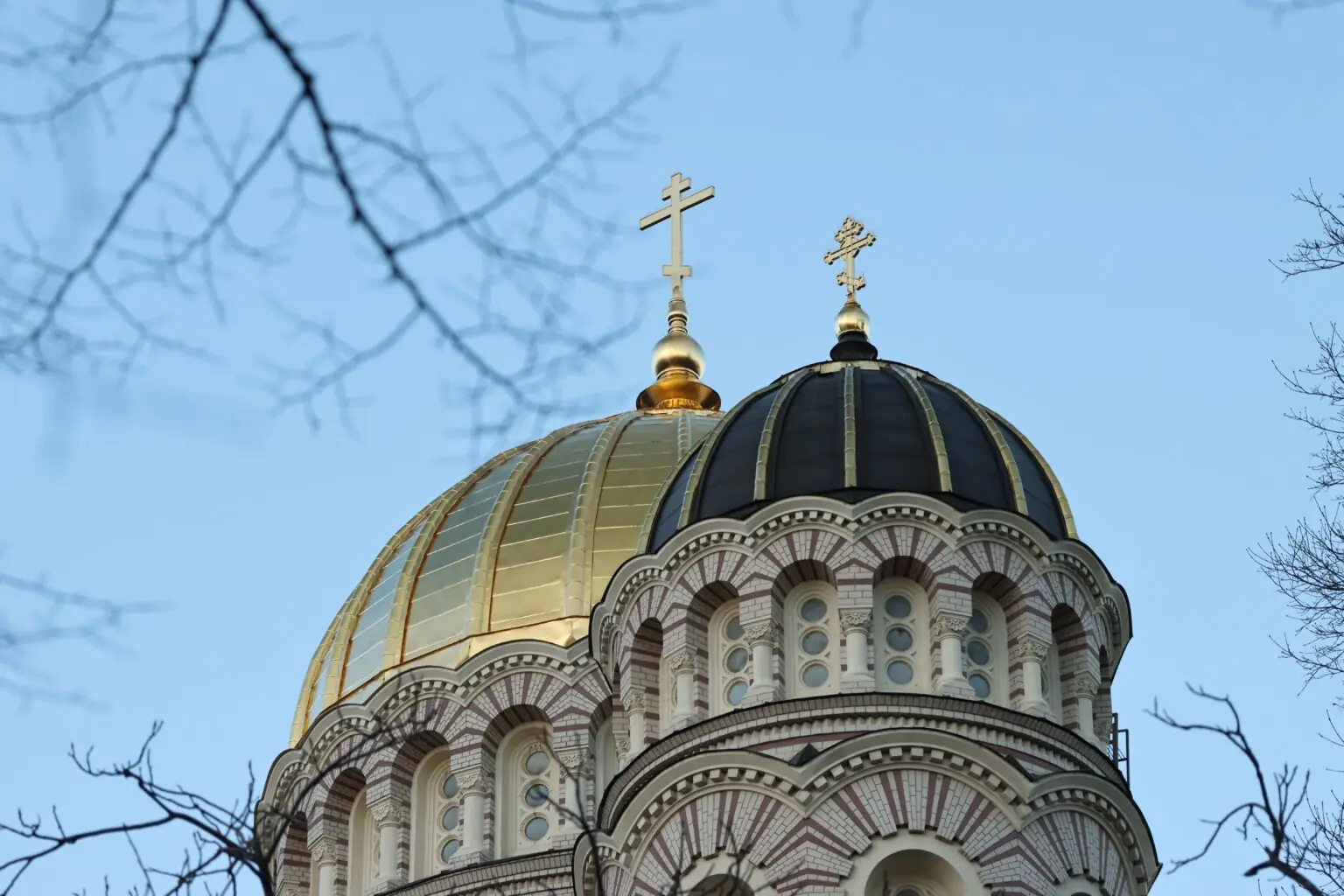
For the past four years, the Estonian Orthodox Church, now known as the Estonian Orthodox Christian Church, has been under almost constant political and legal pressure. First, it was demanded greater independence from Moscow, then a change of its statutes and name, and then the question of completely severing the remaining canonical ties with the Moscow Patriarchate was raised. At the same time, Metropolitan Eugene’s residence permit was not extended, as a result of which he had to leave Estonia. The clergy were restricted from entering the country, and Interior Minister Lauri Läänemets publicly spoke of his intention to designate the Moscow Patriarchate as a terrorist organization. He also personally discussed with the Pühtika Monastery the possibility of transferring it to another church jurisdiction.
Each of these steps can be explained by the Government on grounds of national security. However, when viewed as a whole, they paint a picture that can hardly be described as ordinary state control over compliance with the law. The state is increasingly entering a space in which the secular representative of the state, by its very nature, should not have a decisive say. After all, a decree and a church decision are not within the competence of the Ministry of Internal Affairs. The canonical order of the church should not be determined by the state security forces.
One can have any negative attitude towards the position of the Moscow Patriarchate; one can consider it politically unacceptable or even dangerous. However, the European understanding of freedom of conscience lies precisely in the fact that the state does not determine the “correct” religion or the “correct” patriarch for a citizen.
If a particular clergyman has violated the law, collaborated with a foreign intelligence service, financed illegal activity or called for violence, there are criminal investigations, prosecutors and courts. However, if, instead of a specific illegal act, canonical affiliation itself becomes the reason for state pressure, we are entering a completely different legal reality.
The Estonian Orthodox Church has been trying to find a compromise. In 2024, it changed its statutes, emphasizing its administrative and financial independence. In March 2025, it received a new official name, no longer mentioning the Moscow Patriarchate. If the real goal of the state was to exclude political management of a religious organization from abroad, this could have been the basis for further dialogue.
However, it gradually became clear that the issue is much broader: the church is actually expected to break the canonical bond itself. And this is where the fundamental problem arises. The state has the right to demand political loyalty to its laws, but it does not have the right to demand theological loyalty to a religious center that is politically acceptable to it.
It is extremely noteworthy that the first serious obstacle to this direction was not the Kremlin or the Moscow Patriarchate, but the President of Estonia itself, Alar Karis. He twice refused to sign the amendments to the Churches and Parishes Act, citing, among other things, the disproportionate restriction of freedom of religion. He then referred the issue to the State Court for consideration.
In June 2026, the Court ruled that the amendments were in accordance with the Constitution. However, it would be strange to consider this as the solution to the problem itself. The Court answered the question of the admissibility of the law under the Estonian Constitution. However, it did not answer the much more important question: should a democratic state at all use such a tool to reshape the religious life of its citizens? All the more so since international human rights organizations have also expressed concern about the development of the situation. This fact is extremely important because it takes the discussion out of the convenient scheme according to which any objection to Tallinn’s policy can be labeled as Russian propaganda.
There is one more aspect that is preferred to be discussed much more cautiously in Europe. We have already watched the political conflict over canonical Orthodoxy unfold in Ukraine. The situation is, of course, different: the country is in a state of war, and the question of relations with Moscow has a completely different urgency. But that is precisely why the Ukrainian experience should have become a warning, not a guide to action, for other European states.
When a religious organization begins to be viewed primarily through the prism of its geopolitical affiliation, the line between suspicion of the institution and suspicion of its millions of believers very quickly blurs. An ecclesiastical dispute becomes political, a political dispute becomes administrative, and finally an ordinary citizen finds that his religious choice has unexpectedly turned into a question of his state loyalty and integrity.
This is where Europe must be extremely careful. We did not spend decades building the conviction that human rights are universal and independent of political conjuncture in order to now introduce geopolitical exceptions for them. Religious freedom does not need protection when a person chooses a church that pleases the state. The real test of this freedom begins precisely when the state does not like his choice.
I am not suggesting that Estonia ignore real threats, and certainly not that it be naive to Russian influence. If there is evidence of Moscow’s interference in the activities of specific parishes, it should be presented. If there are illegal financial ties, they should be investigated. If a specific clergyman poses a security threat, the state has all the necessary legal tools at its disposal to respond.
However, there is a huge difference between fighting foreign interference and fighting canonical affiliation. The former is the state’s duty. The latter risks making the state a party to a religious dispute.
Estonia has today reached a very dangerous threshold. The danger lies not so much in the fate of one Orthodox Church, but rather in the precedent that may be set if Europe adopts a simple formulation: a politically inconvenient religious bond is in itself sufficient reason to restrict the rights of believers.
And such precedents have unpleasant consequences – they rarely remain within the original context in which they were created. It is possible to sincerely protect the European order from external influence and at the same time gradually destroy one of its fundamental principles. It is possible to so consistently look for threats to freedom from the outside that one day we will find that we are already starting to restrict freedom from within.
That is why what is happening in Estonia deserves not applause for another demonstration of “determination”, but a very serious European discussion. Because a state that starts to determine which church is the right one for its citizens is embarking on a path whose negative end European history knows all too well.
https://europeantimes.news/2026/09/on-the-border-between-national-security-and-freedom-of-religion/
Related posts:
 Ján Figeľ: Religious freedom is a litmus test of all human rights
 Why Japan Should Guarantee Religious Liberty to the Unification Church/Family Federation
 Persecution of Religious Minorities in the Middle East urges EU to act
 JAPAN: The Dissolution of the Family Federation is “Arbitrary”
 Figel’: “Action for Religious Freedom is a Moral Obligation”
 Voluntary contribution to the French Constitutional Council defending the right of religious organisations not to accommodate the practice of euthanasia and assisted suicide