 Slovenčina
 English
European identity and the challenges of intercultural dialogue
Luxembourg, 21 September 2007
President Santer,
Ladies and Gentlemen,
Dear Friends of Culture,
I accepted the invitation of Minister Charles-Ferdinand Nothomb and am very happy to be with you today here in Luxembourg. This country is at the heart of the European integration process: still recently, the Accession treaty with Romania and Bulgaria was signed here, in the Neumünster Abbey. By the way, this place is a former abbey, just like the former Berlaymont in Brussels. European common legacy is not only in the buildings and architecture, but also in the spirit, a spirit of openness and dialogue.
This conference puts on the table some of the most crucial issues for the future of Europe, and I congratulate the organisers for their insight and their boldness. It is clear to everyone that immigration, enlargement and other changes that are independent of these factors are transforming Europe’s individual and social landscape. What is less clear is what response we should give to these changes. Should we be concerned? Should we resist change? Should we prepare for gloomy scenarios?
Of course, transformations always involve potential risks; but fear of change is certainly not the correct attitude; especially on the part of intellectuals and political leaders. Life is change and change means life. People expect positive answers from intellectuals and political leaders.
Intellectuals and scholars are expected to gather reliable data and trends help us understand their significance, and come up with critical and fresh views. From political leaders people expect—among other things—unbiased judgement, the ability to identify realistic and imaginative solutions, and a single–minded determination to serve the common good in the interests of present and future generations. That’s how our Founding Fathers were.
What really counts is that both politicians and thinkers should look at the changes brought about by the new social mix of Europe as opportunities; not only as challenges. They should spread a message of realism and hope.
Why should we fear change and growing diversity? Come to think of it, Europe has never been a uniform cultural and religious place in its long history. We have always had to cope with each other; we have learned from each other; often we have fought each other because of conflicting interests and worldviews. We should never forget this. Our diversity is part of our genetic makeup.
Another thing we should not forget is that diversity and change are among the pillars that buttress the process of European integration. For the past half century, we have been writing a radically new chapter in the history of Europe, and the systematic respect of diversity is one of its distinctive features. 50 years ago, 6 countries started to build unity in freedom in the West, while in the East we were “united” without freedom. Without respect for human dignity the totalitarian system had to collapse one day or another – it came in 1989, in annus mirabilis.
The EU has become a unique geopolitical organism also because it is designed as a community of cultures and values built on the principle of respect for cultural diversity. Jean Monnet in his Memoirs wrote: “Nous ne coalisons pas des Etats, nous unissons des hommes”. Community of people is more demanding ambition, but also more important one than any alliance of states!
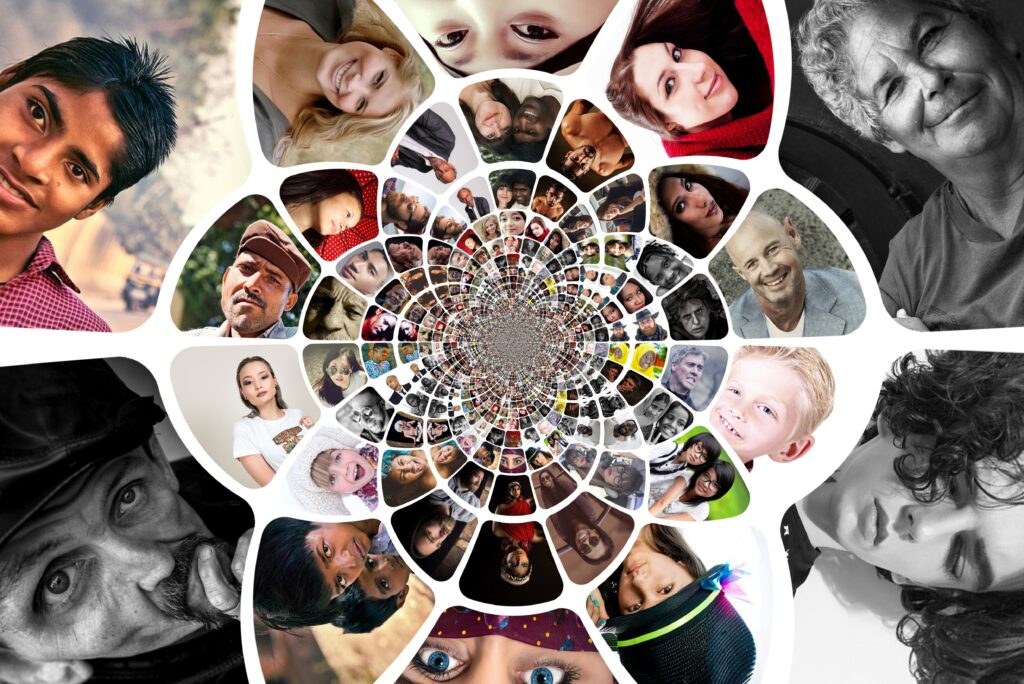
Europe’s diversity is expressed in many forms: peoples, cultures, and the different strands of our historical heritage. Diversity is growing through enlargement and immigration, but is not a problem for us, as it is one of our permanent features. We are like a mosaic, and together, with all our diversity, we form a beautiful picture. I think the best narrative for Europe in XXI Century is united in diversity.
Talking about diversity, let me share with you some thoughts about languages, which are very dear to me because I believe they form the basis of our identity and are fundamental for intercultural dialogue.
Languages are perhaps the clearest sign of our diversity; and the multilingual nature of our institutions is the clearest sign of our respect for diversity. A principled policy for multilingualism, which I launched in 2005 at European level, is necessary for intercultural dialogue, a practical instrument for mutual comprehension, and the key to acquire, interpret and apply knowledge about the other cultures of Europe. 23 official languages in three alphabets therefore should not be seen as a problem, but as characteristics of real community. A Union of 27 countries is more European.
Next year we celebrate the European Year of Intercultural Dialogue. The objectives of the Year are: respect of cultural diversity, promotion of EU citizenship, and openness to the world. Instead of commenting and lamenting, we have to build more together. We will be organising a lot of events, both inside and outside Europe.
Ladies and Gentlemen,
This year we mark the fiftieth anniversary of the EU. Half a century is a very short time for a project of our scope and ambition. However, it is enough time for us to look back and consider what we have accomplished. The construction of Europe is the biggest geopolitical innovation on the international scene since the Second World War.
Fifty years ago, our founding fathers dreamed of a united Europe as a means to prevent the tragedy of war ever ravaging our continent again. I am convinced that this political objective was dictated by a moral imperative. The strong religious and humanistic backgrounds of the figures like De Gasperi, Adenauer, Schuman and many others was the driving force for what was to become the European Union.
Another giant step in contemporary history was also inspired by a Christian contribution. It is the Universal Declaration of Human Rights. One figure stands out in the process that led to the Declaration, that of Jacques Maritain, who actively worked on it.
Maritain is now widely recognised as one of the greatest thinkers of the twentieth century and we can still consider his figure as an intellectual, spiritual and political beacon for us all. He tirelessly spread a message of freedom, independent and critical thinking, and a commitment towards dialogue and co–operation between peoples and cultures. Maritain’s philosophical work laid the foundations for these views. He believed in natural–law ethics. For him, ethical norms were rooted in human nature and natural rights were rooted in natural law. So, it should not be surprising that he was directly involved in the drafting of the Declaration of Human Rights, because the norms that regulate individual and social behaviour ultimately derive from universal principles.
Maritain was exemplary in his teachings as he was in his service to the community, both words and deeds. It was only logical for him to bring his ‘integral humanism’ into the political arena.
Why to talk about Maritain? I can see that this symposium brings together scholars and politicians. I welcome this choice and I would like to take advantage of the opportunity to put forward some personal considerations.
Today, the gap between intellectual and political circles has become too wide. Yet, I believe that each of the two worlds needs the other.
It seems to me that political debates are in short supply of ideas, vision, and imagination. Today, many politicians are more concerned about their sound bites when they appear on TV rather than about finding workable solutions to the concerns of their constituents. Decision makers could certainly use fresh and daring ideas from spiritual and intellectual circles.
At the same time, I would like to see more intellectuals cross the bridge between their studies and active political and social involvement. I am calling on intellectual and spiritual personalities to come out from their professional circles and take a keener interest in society and politics—no matter whether from the left, the right, or the centre.
It is about time they found new ways to get involved in political discourse. Following the footsteps of Maritain, they could bring to the political arena a fresh dose of trust in dialogue and cooperation across ideological and religious divides.
We live in a pluralistic age; today, things can get done only if people of different intellectual and spiritual persuasion can work together in the pursuit of common goals. Constant dialogue is a precondition to serve the public good. And I think this is a task for which spiritual and intellectual movements and organisations, and responsible individuals are ideally suited. We can bring added value and synergy. Dialogue is not a sign of weakness: it’s a sign of maturity and strength.
Speaking at this place and to this forum I am convinced that Christians can bring their testimony to European societies starting from one of the most cherished values—universal brotherhood. At least, we should agree on a shared meaning for the very terms on our debates. Your conference explicitly puts this issue on the table; it asks whether we understand the same things when we use words such as democracy, universalism and secularism.
A common understanding of these values and ideals lies at the basis of public debates at any level: local, regional, national and international. This is why we need to intensify the dialogue among the increasingly diverse mosaic of cultures that is composing the image of Europe today.
Ladies and Gentlemen:
I think that only a few years ago a symposium like the one we are holding today would have been unthinkable. Who would have thought that the challenges and opportunities of a multicultural Europe would take centre stage when our Union was consolidating the internal market and planning the introduction of a common currency?
Recent policy developments in the domain of culture are a consequence of a strategic policy adopted by the Barroso Commission. Towards the end of 2004 a critical momentum was reached around the notion that European integration needed a new intellectual climate. We are beginning to realise that our united Europe would be incomplete if it did not make room for the domains of culture.
That’s why it is very timely that in the year of the 50th anniversary of the European Community, the Commission brought out the first communication ever on culture, based on three pillars:
- Promotion of cultural diversity and intercultural dialogue;
- Culture as a catalyst for creativity and creative industries;
- Culture as an essential part of EU external relations.
For some time now the European institutions have been regarded as impersonal regulatory bodies that deal with the nitty–gritty of the res publica. It is true that EU regulations, directives and decisions draw their legitimacy from the treaties; but their validity in the hearts and minds of our fellow Europeans derives from a shared sense of belonging and a desire to build our future together.
Ladies and Gentlemen,
Openness is fundamental for our future: open-mindedness to the challenges of globalisation, but also open-heartedness with empathy, sympathy, and solidarity with people. I wish you all to keep an open mind and an open heart for the future of Europe.
Thank you.
Podobné články
 EPP-ED Hearing on Cultural Diversity, Religions and Dialogue
 European Values in the light of the EYICD 2008
 European identity, intercultural dialogue, and religions
Is there a European culture?
 Cultural Diversity in the EU: A Legacy from the Past, an Asset for the Future
Unity and Diversity: Europe’s Approaches to Culture and Languages