 Slovenčina
  English
 Europe once transformed a continent of war into a community of peace. What lessons can that experience offer for ending the war in Ukraine?
Why Europe Must Rediscover the Political Imagination of Peace
Wars are far easier to begin than to end. This is one of the oldest and most tragic lessons of human history. Yet every generation seems to rediscover it the hard way.
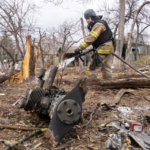
The war in Ukraine reminds us of this truth every day. What began as a geopolitical confrontation has developed into the largest war on European soil since the end of the Second World War. Cities have been devastated, millions of people displaced and entire regions transformed into battlefields.
And yet the most important question remains unresolved: how will this war actually end?
Military strategies can shape the course of war, but they rarely determine the final settlement. History shows that wars usually end when political imagination returns — when leaders and societies begin to see alternatives to endless confrontation.
Wars rarely end on the battlefield alone. They end when political imagination returns.
Europe itself is living proof that such transformations are possible.
A Continent That Once Chose Peace
For centuries Europe was defined by conflict. Empires fought for territory, dynasties for power, and ideologies for dominance. The continent was the epicenter of two world wars that devastated not only Europe but the entire world.
Yet after 1945 something extraordinary happened. Political leaders began to build a new European order based not on rivalry but on cooperation.
This transformation did not happen by accident. It required courage, vision and political creativity.
Statesmen such as Robert Schuman, Konrad Adenauer, Alcide De Gasperi and Jean Monnet understood that peace could not be maintained simply through military deterrence. A more profound change was necessary.
Their answer was simple but revolutionary: countries that share strategic economic interests are far less likely to go to war with each other.
This insight led to the creation of the European Coal and Steel Community — the first institutional step toward what later became the European Union.
The transformation of Europe after 1945 showed that former enemies can become partners when they begin to share common interests.
At the same time the Marshall Plan helped rebuild the shattered economies of Europe, including those of former enemies. Economic reconstruction created stability, and stability created the conditions for peace.
The transformation of Western Europe from a continent of war into a community of cooperation was one of the greatest political achievements of the twentieth century.
Today Europe faces a new test of that achievement.
The Reality of a Prolonged War
Looking at the situation in Ukraine today, three possible trajectories can be imagined.
The first — and unfortunately the most likely — is the continuation of the war as a long and exhausting conflict.
Ukraine has already suffered immense human and material losses. Cities and infrastructure have been destroyed, millions have fled their homes and the economic burden continues to grow.
At the same time Russia retains the capacity to sustain a prolonged war. Even with strong Western support, Ukraine remains heavily dependent on external military and economic assistance.
The battlefield dynamics suggest that neither side is likely to achieve a decisive victory in the near future.
History offers many examples of such wars of attrition. They often produce not victory but exhaustion, instability and long-term geopolitical uncertainty.
The Risk of Escalation
A second scenario is even more troubling: escalation.
Europe knows from its own history how regional conflicts can spiral into broader confrontations. The two world wars of the twentieth century began as European conflicts before engulfing much of the world.
Peace in Europe was never inevitable. It was the result of courage, vision and political leadership.
The war in Ukraine remains geographically limited, but the geopolitical tensions surrounding it are global. The conflict now intersects with the strategic interests of major powers, including the United States, NATO and the European Union.
Military support for Ukraine and stronger deterrence measures reflect legitimate security concerns. Yet history also suggests that military strategies alone rarely produce durable peace.
At some point diplomacy must return to the center of political efforts.
Why Diplomacy Cannot Be Abandoned
The roots of the current conflict extend back many years. The crisis following the events of 2014 and the subsequent war in eastern Ukraine exposed deep fractures within the European security order.
The Minsk agreements attempted to stabilize the situation but ultimately failed to produce lasting peace. As relations between Russia and the West deteriorated further, mistrust deepened on all sides.
Russia’s full-scale invasion in February 2022 transformed this confrontation into a major war.
Any sustainable peace will therefore require more than developments on the battlefield. It will require renewed diplomatic engagement involving the key international actors shaping the broader geopolitical environment.
In particular, the relationship between the United States and Russia will inevitably play a decisive role in any future European security framework.
Diplomacy is often criticized for being slow, uncertain and frustrating. Yet it remains the only mechanism through which lasting political settlements can be achieved.
The Importance of Places of Dialogue
Diplomacy requires institutions and places where dialogue can occur.
For decades Vienna has been one of the central hubs of international diplomacy. As the host city of the United Nations, the Organization for Security and Cooperation in Europe (OSCE) and numerous international organizations, it embodies a long tradition of negotiation and multilateral engagement.
Such institutions remind us that international security cannot be built through military power alone. It requires constant dialogue, patient negotiation and the willingness to explore compromise.
These may seem modest tools compared to armies and weapons, but history suggests they are often far more powerful.
Rethinking the Foundations of Peace
The geopolitical environment today is obviously different from that of 1945. Yet the underlying lessons of Europe’s postwar transformation remain relevant.
Peace often requires creative thinking that goes beyond immediate military calculations.
Some analysts have suggested that elements of the Schuman and Marshall initiatives could inspire a broader conversation about the future of European security.
Such an approach would not ignore the realities of the war. Instead, it would focus on creating long-term incentives for cooperation.
Shared interests in areas such as energy infrastructure, natural resources, technological innovation and economic reconstruction could gradually help rebuild trust between societies that are currently locked in conflict.
Any such framework would necessarily involve Ukraine, Russia, the European Union, the United States and other international partners.
Peace settlements are rarely perfect. But they can create conditions in which war becomes less likely.
The Human Dimension of Peace
Peace is not only a matter of treaties and political agreements. It also involves people.
Millions of Ukrainians have been displaced by the war. Entire communities have been destroyed. Families have been separated, and deep psychological wounds have been created.
Any future settlement will therefore need to address not only territorial and political questions but also humanitarian concerns.
The return of refugees, the protection of minority rights, accountability for war crimes and the reconstruction of destroyed regions will all be essential components of a durable peace.
Reconciliation between societies will take even longer. Trust cannot be rebuilt overnight.
Yet history shows that even bitter enemies can eventually find ways to coexist.
Europe’s Responsibility
Peace in Europe has never been automatic. It has always required deliberate political effort.
The war in Ukraine has already brought immense suffering and uncertainty to the continent. Yet the experience of European history suggests that even the most destructive conflicts can eventually give way to cooperation.
Political innovation does not always mean inventing entirely new ideas. Sometimes it means rediscovering successful ideas from the past and adapting them to new circumstances.
The transformation of Europe after 1945 demonstrates that reconciliation is possible even after the deepest divisions.
The road to peace in Ukraine will be long and uncertain. But history reminds us that peace often begins with something simple yet powerful: the courage to imagine it.
If Europe can rediscover that imagination, the tragedy of war may yet open the door to a renewed architecture of peace.