 English
  Slovenčina
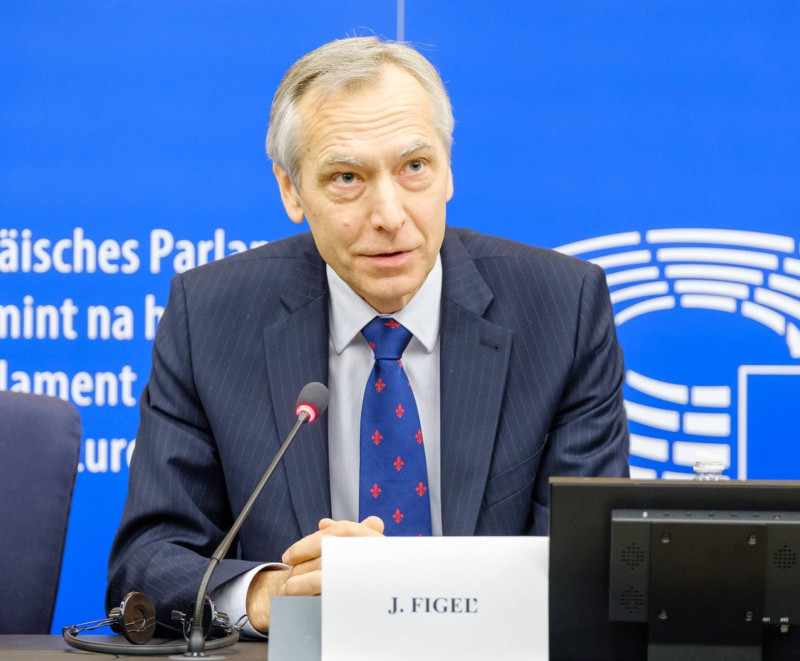
 4th EUA Convention of European Higher Education Institutions.
“The future of European Higher Education beyond 2010—diversity with a common purpose”.
Lisbon, 29 March 2007

Honorable President of the EUA, Distinguished Minister, Rectors, Ladies and Gentlemen,
I am very pleased to be here, to be among so many committed actors in Higher Education and happy to continue the dialogue the Commission has with you. I retain good memories of the last Convention in Glasgow 2 years ago, where both the President of the European Commission and I addressed the theme of strong universities for a strong Europe.
I am, of course, also happy that the EU is seen as playing an increasingly important role in driving forward reform in Higher Education and in supporting the actors involved.
We are at this time commemorating the 50th anniversary of the Signature of the Treaties of Rome. They laid down the foundations of the project for unity in peace and freedom in Europe.
I was born in Czechoslovakia, where a post-Stalinist bloc tried to build unity without freedom. That approach can never work. Now we have both unity and freedom as a reality. This process began with steel and coal but has now moved on to perhaps more fundamental, if less tangible, issues: now the debate is about identities, European citizenship, cultures, the borders of Europe, how to create a Europe of Knowledge and meet the challenges of globalisation. This is a tremendous historical change.
Almost 40 years ago, a speech was made that changed the world, and the whole world still remembers the central phrase of that speech: I have a dream. Well, I don’t suppose that my speech to you today will change the world like Martin Luther King’s did, but I do have a dream that I would like to share with you, and that dream is also about change, change in higher education.
I want to share with you today my dream for European Higher Education beyond 2010.
I dream of European Higher Education and Research areas that serve our citizens even more then today and that are really open to society. In this vision of how things could and should be, universities would share new freedom and new responsibilities.
I have some suggestions on how to use this new freedom, but let me first sketch out for you the basic conditions. By basic conditions I mean at least the following: the realisation of the he European Higher Education Area and Research Area (including quality assurance), the right mix of public and private funding, effective public steering and responsive universities.
We have a tremendous legacy – Bologna was the first university. But we should use this legacy to help build our future.
You will forgive me that I start my description of this vision, here in Lisbon, with the Lisbon Strategy, which in my view is inseparable from our common efforts in education and research.
The Lisbon Strategy and the European Higher Education and Research Areas
The Lisbon Strategy for growth and jobs, launched back in the year 2000, succeeded in raising the awareness of the importance of education and training: All Member States agreed that the quality of education and training, in particular in science and technology, is a key ingredient for a successful European Union. We all became aware that yesterday’s students are today’s early stage researchers and will be tomorrow’s potential Nobel Prize winners.
After the Glasgow Convention, the future of European Universities was a question debated at the highest level, for example at the informal European summit at Hampton Court in London, and then at the informal European summit at Lahti under the Finnish presidency. At Hampton Court, along with questions such as energy supply and security, universities were one of six issues identified as crucial for Europe’s future. At Lahti, the question addressed was how to improve Europe’s innovative capacities, and universities were at the centre of the debate. You can see then, that universities are already closer tio the heart of our European concerns.
I am sure, therefore, that Governments and universities will have worked hard to have a solid and attractive European Higher Education Area in place by 2010, and that by then the Bologna Process will have achieved most of its objectives:
- Free movement of students and teachers
- Effective internal and external quality assurance
- Qualifications frameworks and credit systems boosting transparency, recognition and lifelong learning (this latter point is not a luxury but a necessity).
At the same time we will see much progress in the development of the European Research Area, with a European “internal market” for research with:
- free circulation of researchers, technology and knowledge
- effective coordination of national and regional research activities, programmes and policies at European level and
- initiatives designed for implementation and funding at European level.
Increased attention will be given to the intersection of the European Higher Education Area and the European Research Area, especially through the linking of young researchers at doctoral level. Doctoral candidates will be enjoying attractive conditions in which to pursue their research training, including employment status.
Equally, universities will make sure that doctoral candidates acquire the generic skills that provide them with good career prospects. This means that they will receive, in addition to scientific training, the appropriate training in research, Intellectual Property Rights, management, communication, networking, entrepreneurship and team-working.
Quality assurance
One of the key elements of the Bologna process is quality assurance. Indeed, I believe this is the core of the Bologna Process, because the basis for trust. We will deal with this at the upcoming Ministerial Conference in London. In the next decade, I am sure that trustworthy well connected internal and external quality assurance systems will have been set up in all European countries with feedback loops that allow for the constant improvement of output.
It will be a normal procedure for any institution or department to turn to the European Register of Quality Assurance Agencies to find the agency best suited to their needs, anywhere in Europe, be it national or international, general or subject specific.
Students will find it easy to choose their university, as all study programmes will be described in detail on the university’s website, indicating the learning outcomes to be achieved, the EQF level and the kind of accreditation or certification the programme or institution has been awarded. Sophisticated rankings will provide additional information for those who need it.
The right funding mix
The funding of higher education will still be an issue, but the situation will have notably improved, because Member States will have followed the recommendation the Commission made back in 2006 of devoting at least 2% of their GDP to the higher education sector – as opposed to around 1.2% today. Of course, there are a small number of European countries that achieve this higher investment level already: they do it because they believe it is important and their success in both economic and social terms is the proof that they are right.
Public funding will follow new principles, taking into account the new diversity of higher education institutions and focusing more on outcomes than on inputs: Universities will no longer be primarily funded for what they are or are called, but for what they do, and how well they do it.
It is clear, however, that the larger part of the additional money invested in higher education and research will not come from the public purse but from private sources. Universities will have assumed more responsibility for their own long-term financial sustainability, particular in research. Many of them will have diversified their research funding portfolios through collaboration with enterprises, foundations and other private sources.
Tuition fees belong to these private sources. When the insight, backed by various studies, that free access to higher education does not necessarily guarantee social equity gains ground, European countries will become much more willing to discuss and re-examine this matter. They will make sure to provide an efficient and equitable mix of student fees on the one hand, grants and loan schemes on the other.
Since research findings had shown that money spent on a university degree paid higher returns that real interest rates, the idea of contributing to the funding of higher education will become more acceptable to private households.
I want to underline here that efficiency and equity should be seen as a joint and fully compatible goals. There is no necessary trade-off between the two and they should not be seen in terms of an “either/or” choice.
I am well aware that some countries have provided examples of a rather successful combination of free tuition with social equity but I invite all stakeholders to take a fresh an unbiased look at the different options before us.
Effective public steering
Open European Higher Education and Research areas also mean freedom for universities. Governments will have abandoned any attempts to micromanage universities from above. This doesn’t mean that they will have withdrawn from their responsibility for higher education, on the contrary.
Public authorities will stay responsible for the rules of the game, for example as regards qualifications frameworks, quality assurance and recognition. But governments will have entered a new type of partnership with their universities, limiting themselves to providing a regulatory framework of policy objectives, funding mechanisms and incentives for education, research and innovation. In this new partnership it is left to the institutions to take their own strategic decisions.
Freedom and responsibility are two sides of the same coin: unless both sides are present, the coin will not be valid.
How will all this freedom and responsibility be used? I expect there to be more responsive universities, more mobility, more diversity and more openness to business and society at large, also beyond the Europe borders.
More Responsive universities
Beyond 2010, universities will also have done their homework. They will have adapted their internal governance systems to cope with the newly acquired freedom, autonomy and accountability. Universities will be managed professionally in all their activities and will have developed institutional strategies supported by the necessary internal reforms.
Universities will have learnt to make the most of the new openness that allows them to take their own decisions: to decide on the launch of new study programmes, choose their research portfolio and manage their human and financial resources as they see fit. They will also select their own students on the basis of their academic potential.
Beyond 2010, European universities’ greater autonomy and full accountability to society will allow them to be more innovative and responsive to the more challenging global environment in which they operate by then.
More mobility
I also expect more mobility. By, say, 2015, it will be quite common – and no longer the exception – for any student to leave his or her university at one point of their studies, either to go abroad or to do a placement in industry.
A good example of this is the new University of Luxembourg: there, mobility is a statutory requirement.
Going abroad will not pose a recognition problem, as thanks to the European Credit Transfer and Accumulation System ECTS, the EQF and the numerous cooperation agreements between universities recognition problems will be rather a thing of the past.
Mobility of teachers, researchers and administrators will have become a normal phenomenon. Existing obstacles, for example to non-portability of pension schemes, will have long since been removed. Spending part of one’s working life abroad will be considered an asset in career progression. Moreover, the mobility of researchers across sectors – from universities to industry and other research settings and vice-versa – will be a valued component of a rewarding research career.
More diversity
The large degree of autonomy will have lead to increased diversification of European universities, since it allowed them to build up their relative strengths on a European scale. An example of this are the five different universities that are co-hosting this conference!
The days when most higher education institutions uniformly strove to qualify as the same type of research-intensive universities will long be over. Each university will have its own specific mission and profile, matching the particularities of its environment.
As a result we will see a certain concentration and specialisation of research-active universities, reinforcing the emergence of European centres of excellence which are competitive at the global scale. We will also see the emergence of universities that excel in addressing research and training needs at a more national, regional or sectoral scale.
There will be different balances between education and research, different approaches to research and research training, as well as different mixes of services and academic disciplines, but every university in this diverse system will aim at excellence in their area of specialisation.
More openness to business and society at large
Universities will make full use of the opportunities provided by lifelong learning, a concept that many institutions found hard to grasp back in the first decade of the century. In times of demographic change and globalisation universities have understood that there are less students enrolling directly from school, yet a greater need to continuously educate and upgrade the workforce and population at large. Therefore they will have reacted by providing study programmes to adult students and learners with non-traditional backgrounds.
The qualifications frameworks, at European and national levels as well as at sectoral level, will facilitate the recognition of prior learning, including informal and non-formal learning. Initial worries about an alleged incompatibility of the European Qualifications Framework for Lifelong Learning, proposed by the European Commission, and the Framework of Qualifications for the European Higher Education Area will have long since been dispelled. I strongly believe that this will be the case.
The notion of employability which had caused so many discussions and sometimes misunderstandings in the early days of the Bologna Process, will have been systematically integrated in curricular development. This means that students will be provided not only with discipline-specific skills but also with broader employment related skills.
Universities will take care of their graduates, by fully assuming their responsibility for equipping them not only with knowledge but also with know-how and skills. The fostering of entrepreneurial mindsets and management and innovation skills will have become part of the normal learning outcomes of many study programmes.
No university will doubt any longer the strategic importance of its relationship with the business community, as the advantages of structured partnerships with business are obvious: they allow universities to better share their research results and make use of intellectual property, patents and licences. Business partnerships will also lead to more funding, for example through expanding the research capacity or providing retraining courses for the workforce.
It will have become a routine business for universities to communicate the relevance of their activities, in particular those related to research, by sharing knowledge with society and maintaining regular dialogue with citizens, alumni and local and regional players.
The European Institute of Technology: A beacon of innovation and quality
There is one particularly striking emblem of the openness of the European Higher Education and Research Areas: the European Institute of Technology. In ten years time it will have become an integral part of the European Higher Education and Research Areas. With its innovative form of governance, its interdisciplinary opportunities for high level study and research and the involvement of stakeholders, public and private, it has been serving as an inspiring example to governments and universities alike.
The EIT will integrate the best teams, but not in one physical place. It will not be an MIT in Europe. Europe’s strength lies in bringing together the best. With the mobilisation of additional public and private resources, this is not a zero-sum game. I know the EIT is a sensitive topic and has provoked many reactions, but this was also the case with both the ERC and Erasmus. So, let us be innovative and let us be open-minded and we will find the right answers.
The secret of its success lies in the fact that it does not impose rigid structures but that it facilitates the contact between students, teachers, researchers and business around promising new knowledge areas.
The external dimension: Bologna goes global
The fact that I am addressing you today together with two outstanding speakers from the United States of America and China shows you that globalisation is also affecting higher education: One cannot speak about the future of European higher education without looking at developments in other parts of the world.
The Bologna Process is intended to make European Higher Education more attractive to non-European countries and the Lisbon Strategy set the objective of making European education and training systems a world quality reference.
In my projection, this has long since been achieved: all European countries take active part in the European Higher Education Area and there are intensive links to other parts of the world through mobility, joint degrees, mutual recognition agreements and policy dialogue.
Mr. Zhang, we both did part of our studies in the United States – thanks to Mr Ward and his colleagues. In my vision of the future, however, it has become equally important for brilliant young students from China, the United States and other parts of the world to study and research in Europe. It’s worth recalling here that, since 2000, the number of Chinese students in Europe has so far grown fivefold, from 19,000 to almost 100,000.
The European Commission has helped Bologna to “go global”, by providing support through our bilateral and multilateral programmes. We have recently been able to triple the level of support for higher education cooperation with the USA and double the level for Canada. Australia is interested in developing cooperation in the same way. We are now developing the proposal for Erasmus Mundus II. The first Erasmus Mundus programme has proved a huge success, attracting thousands of non-European students keen on profiting from joint degree programmes that are so characteristic of European university cooperation.
Conclusion
Does all this sound too optimistic? Well, to quote John Lennon, “You may say I’m a dreamer – but I’m not the only one”. Each new Trends Report of the EUA confirms that Europe and its universities have made tremendous progress, and I do believe that the European Higher Education and Research Areas could indeed, ten years from now, resemble the dream I have just outlined. But to get there, determination is important.
Who would have imagined when the original four countries met in the Sorbonne in 1998, or even in 1999, when the Bologna Declaration was signed, that we would today look back on such impressive developments in almost all areas of higher education, like curricular reform, quality assurance and recognition. Israel has just applied for membership, which shows clearly that Europe is already seen as an attractive higher education. Major steps have been taken towards new forms of governance of universities and higher education funding.
We have come a long way together, but at the same time, we must not delude ourselves: In most countries, in most universities, in most disciplines and sectors, the challenges remain enormous. It will require great efforts by everyone before we reach the truly open landscape of higher education and research that I have sketched out today. Higher education today is still suffering from uniformity of programmes, insularity and fragmentation, over-regulation and under-funding, but there is more than a silver lining at the horizon.
The European Commission will be at your side, supporting universities through the Lifelong Learning Programme, the external programmes, the Framework Programme for Research and Development and through policy initiatives. We will continue to facilitate the exchange of good practice between Member States through what we call the Open Method of Coordination.
I would like to close with a last quote on the importance of inspirational dreams, a quote from Erasmus, after whom the most popular and successful EU programme is named. But let me first briefly remind you that with our new Lifelong Learning Programme we are aiming to triple the level of student participation in Erasmus mobility over the next seven years. Erasmus Rosterodamus once said “There are some people who live in a dream world, and there are some who face reality; and then there are those who turn one into the other”. Let us work together to turn our dreams into reality. In this context, I want to say that Europe is not really about geography or political entities: it is about values – including creativity and innovation. Universities are key to both of these.
I congratulate the EUA on choosing this motto for their 4th European Convention and I look forward to hear your suggestions for “Europe’s universities beyond 2010, diversity with a common purpose.”
Related posts:
 Reforming higher education
International Competitiveness in Higher Education – A European Perspective
Reforming higher education
International Competitiveness in Higher Education – A European Perspective
 Achievements of the Bologna Process
 Israel and Europe’s Higher Education
The European Commission’s contribution to the creation of a common European education area
Education: the Key to Europe’s Future
Israel and Europe’s Higher Education
The European Commission’s contribution to the creation of a common European education area
Education: the Key to Europe’s Future