 English
  Slovenčina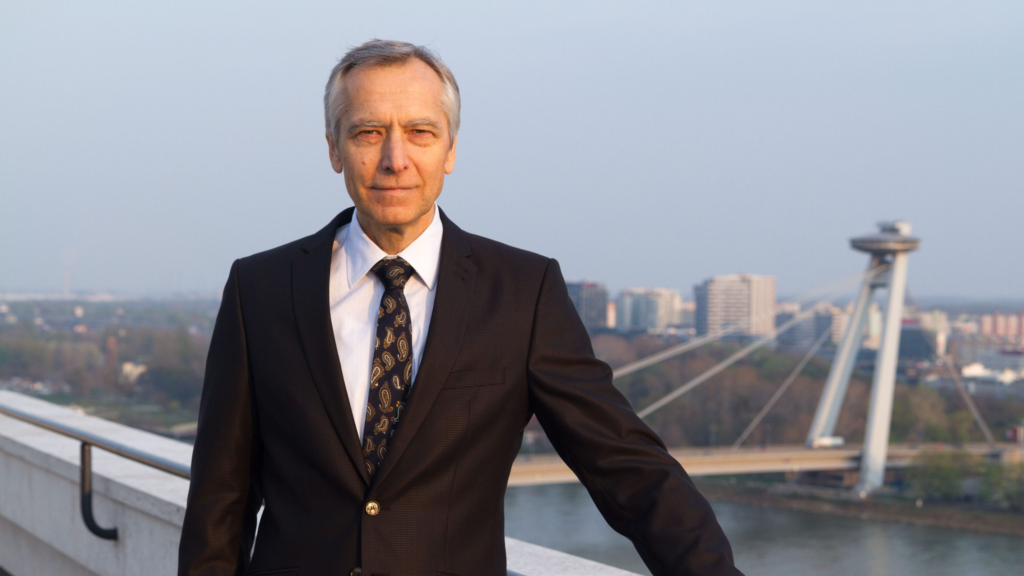
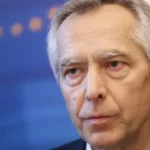
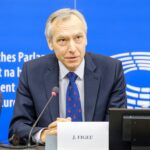
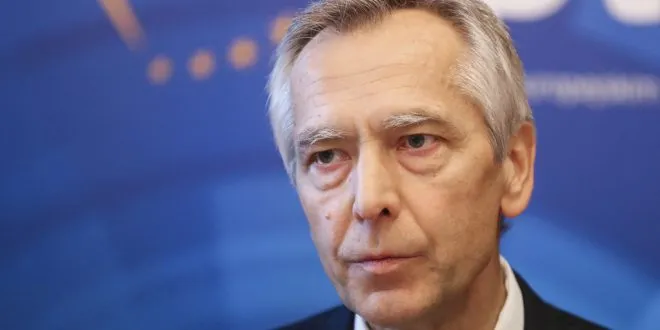
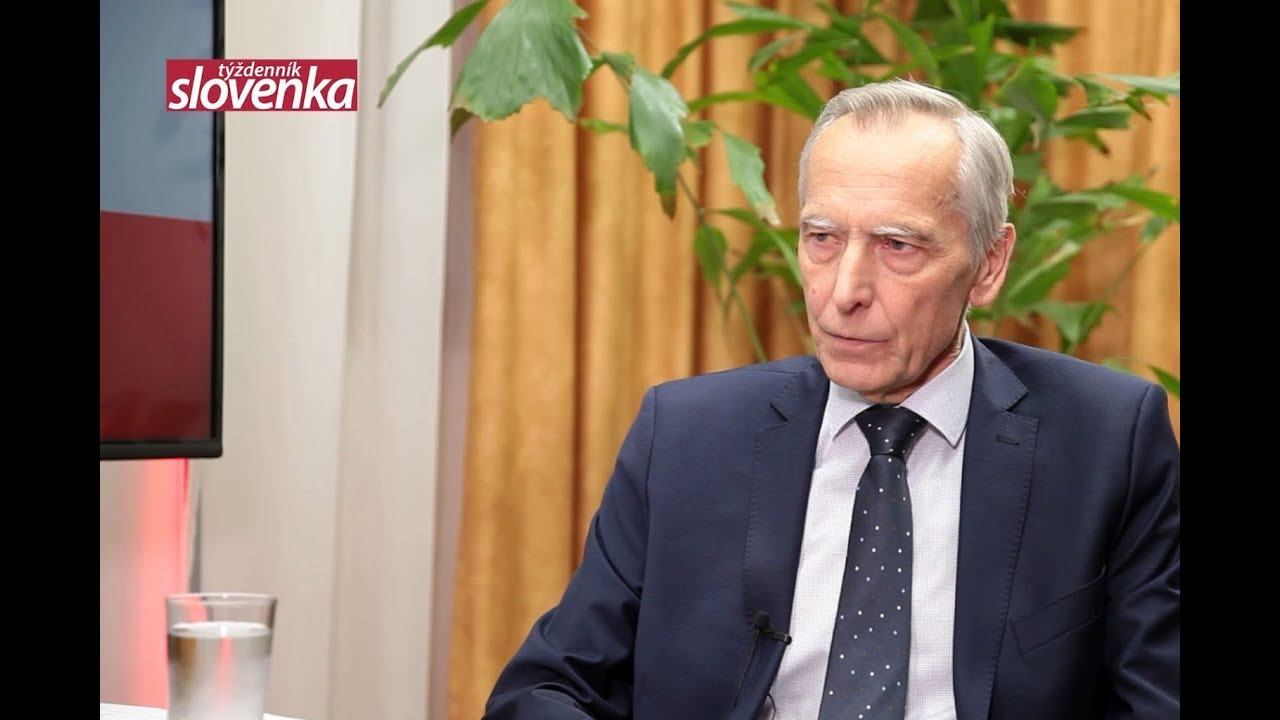
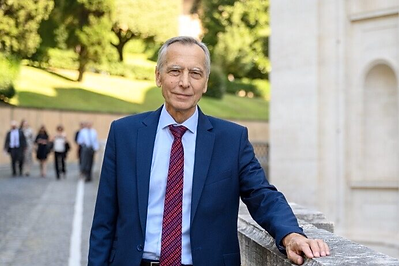
In Budapest, we had the pleasure of speaking with Ján Figeľ, former Deputy Prime Minister of Slovakia and European Commissioner. Today, he is the Special Envoy for the Promotion of Freedom of Religion or Belief Outside the EU.
Mr. Figel, a long career as Slovak Deputy Prime Minister, Party leader, Chief Negotiator of Slovakia with the EU, European Commissioner and delegate member for his country in the negotiations for the first attempt at a European Constitution. A project that later foundered. What has changed in the EU since then?
I would like to repeat the message of Konrad Adenauer, Alcide de Gasperi and Robert Schumann who laid the foundations for the process of European unity: A united and peaceful Europe was a dream of a few, desire of the many and became a need of all. This is still true, because I perceive Europe as a community, as a family that lives in peace, stability and prosperity – not without problems, not without disagreements, but fundamentally dialoguing in order to cooperate and share responsibilities. This has been the case for 80 years in the West, so it is not a dream but a tangible reality. Reunification in Europe and historical enlargement of the EU and Schuman´s Project came in 2004. Since 2004 I was a Commissioner with Romano Prodi and then with José Manuel Baroso. But after 20 years we see a clear paradigm shift in the European agenda and institutions towards more centralist policies. Some centralists and federalists push to turn the European Union into a superstate. We see judicial relativism, weakening of subsidiarity, growing common debts. New ideologies are in constant and growing conflict in Brussels. This is divisive, it makes countries quarrelsome and fragmented but not united. A solution is not to build another European Union, but to return and stay loyal to the values and principles of the original Treaties, which define our legal space, common interests and joint actions. We have no other alternative. We need a peaceful, stable Europe and the European Union. It is our responsibility to understand whether this Union creates the future or consumes the future. Today the lines taken or imposed by Brussels often means loss of our competitiveness, growing unrest and uncertainty of people. Something is going wrong. I support parties, groups and movements that are likeminded and loyal to our common values for greater responsibility towards the future. And future always starts today.
From Eurorealism to the Three Seas initiative. There is also often talk of the cooperation of the V4, the so-called Visegrad Group, following the conflicts in Europe. After the latest frictions due to energy policies, the conflict in Ukraine and geopolitical transformations, what future do you see for this form of cooperation?
We have always perceived the Visegrad Group as a form of pragmatic cooperation of great depth, which involved Central Europe and often invited other countries, too. It is a cooperation inspired by centuries of history in the region and which resumed its path thanks to Czechoslovakia, Hungary and Poland, together representing 65 million population. The V4 was born in Bratislava in 1991. This cooperation is not against the others, it is not an alternative to the European integration but it is an additional engine to make Central Europe more solid, influential and dynamic. These are difficult years because the war in Ukraine is a divisive problem and security burden. A conflict that has divided peoples, politics and governments. We must end the war in order to seek peace. We must insist on cooperation in Central Europe because the word central implies togetherness, something at the heart of the Community, a bridge between East and West. I am convinced that after years of the bloody conflict, inability of the West to find a peaceful solution, it is time for the Central Europeans to come with a realistic path towards dignified peace and complex agreement acceptable to all – Ukraine, Russia, the USA and the EU.
In relation to the conflict in Ukraine, what role did the Czech Republic, Hungary, Slovakia and Poland play?
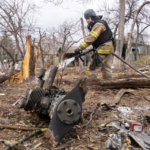
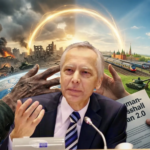
The V4 is at the forefront and neighborhood of the Russian-Ukrainian conflict. There are many refugees here from Ukraine. There are also collaboration and sensitivity on the distribution of energy from the East, a strong and strategic tradition that has evolved since the Second World War. We have vivid memories of invasions, occupations and conflicts. This collective memory is a fertile ground for seeking and working intensively for peace in Ukraine, which is important not only for Ukraine and Russia, but for all of us. The solution to the conflict did not come from President Trump and his administration in 24 hours, nor after a year of negotiations, it did not come from Brussels. Regrettably, every day and night people in the East of Europe suffer and die. And so, there is now a role for Central Europe to be more active, creative and constructive. Road to peace exists. We have even great model that brought European reconciliation, cooperation and transformation after WWII. This is our living and inspirational legacy. I am convinced that Schuman-Marshal Plan 2.0 is applicable for the benefit of worrying states and for the sake of the whole continent and beyond.
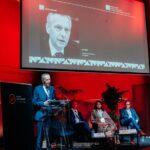
In your speech you emphasized that we are the triune beings: homo rationalis, homo moralis and homo religiosus.On the defense of which of these fronts do you feel that the modern Union is failing?
I think especially in the religious field. Christians are the most persecuted communities in the world. But only recently after years of violence and persecution did the European Parliament recognize this sad record. Term “Christian” has become almost a taboo, to say that the Union was created by Christian Democrats, too. Without these roots, this memory, these fundamental ethical values, we will lose orientation and ourselves. Former President of the European Commission Jacques Delors repeated that “Europe needs a soul”. It is a soul that Christianity had given it and started our era, from the Roman Empire to the present. So, the European Union should not fear the beneficial contribution of Christian values and Christianity, together with other religions. It must actively defend religious freedom for everyone and everywhere, from atheists to Zoroastrians, inside and outside of the EU, because religious freedom is a fundamental human right and litmus test of all human rights. Each totalitarian power attacks as the first this foundation, because it is core of personal freedoms, convictions, ethics and resilience. I hope we did not forget this painful experience since decades of communist regimes in the Central and Eastern Europe. There is a strong and deep nexus between religious freedom and personal dignity. Europe with its moral legacy, historical awareness and deep cultural roots should be a protagonist of this noble understanding of human person with its inalienable and inviolable dignity. This is a principle of integral humanism. Europe is not just a bunch of traders, nor a market place without spirit and beauty. I hope that in times of the ongoing war tragedy, true Europeans will get together to work for more peaceful and humane twenty-first Century.