 Slovenčina
  English
 Presentacíon de las políticas de colaboración entre universidad y empresa a través del deporte en España
Madrid, 26 June 2008

Dear President Cerezo, President Campano,
Magnifico Rector, My Friend Jose-Maria Gil Robles,
Distinguished Guests, Friends of Sport and Friends of Europe,
Ladies and Gentlemen,
I am very pleased to be here with you in this beautiful Vicente Calderón stadium and to learn from you about the cooperation between universities and companies through sport in Spain.
I understand Atlético was established in 1903 at the Universidad Politécnica de Madrid, when a group of students founded the Athletic Club. So, Atlético is a well established Club with a long tradition and, as it looks, it had a very strong link with academia since the beginning.
I am pleased to see that your team will participate in the Champions League next season. Congratulations. And I wish Spain to be successful tonight in Vienna at the UEFA Euro 2008 Championship. Sunday night I plan to go to watch the final match. Shall we see Spain playing then?
Before saying a few words on the cooperation between universities and business in general— and through sport in particular—I would like to pass on the main messages from the White Paper on Sport and the Pierre de Coubertin’s action plan the Commission presented a year ago.
It speaks more than any other policy document in the EU until now on specificity of sport and sport-related rules. For the first time ever we have got an inclusion of sport in the EU Treaty article.
My dream is to have in future a popular sport programme in the EU as we have today in education, namely Erasmus.
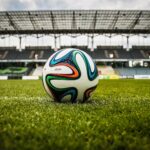
Our football is the best in the world. Europe is a superpower in football, but not in other domains. The reason is that we love football, we invest in it, we care for the quality through open competitions, and the full mobility of players and trainers is a reality, differently from the universities.
History of the European integration and the European football is linked together: Europe helped football to grow in excellence, football helped to integrate Europe. So there are many lessons to be drawn from sport.
But sport is not only a very big show; it’s a popular movement of massive proportions. Both as a show and as a practice, it keeps important social values alive, such as team spirit, solidarity, respect and fair play.
Sport is education, culture, it generates inclusion, promotes talents and solidarity. Via sport we need to promote values which are important for Europe.
According to a survey, Europe has some 700,000 sports clubs and approximately 60% of European citizens practice sport on a regular basis.
Especially through its role in formal and non–formal education, sport improves Europe’s human capital. The values conveyed through sport help develop knowledge, motivation, and spirit of sacrifice.
Finally, let us not forget the health and educational benefits of sport activities, especially when practiced in our schools and universities.
Values promoted by sport are equally needed for the life and vitality of any democratic society. Therefore we need to promote and protect sport in the EU against, unfortunately, such largely spread phenomena of violence, doping, racism, or corruption.
This is why we have started to support sport and physical activity as an integral part of our education and training policies. All the programmes under my responsibility recognise the importance of sport, including those devoted to schools, vocational education and training, higher education and adult training.
I am also convinced that we can make better use of the potential of sport as an instrument for social inclusion. Sport can help revitalise the economic and social environment in disadvantaged areas.
Non–profit sports organisation that work for social cohesion and the inclusion of vulnerable groups can be regarded as social services of general interest.
Finally, in addition to its social and civic benefits, sport is also good for the economy. Sport is a dynamic and fast–growing industry whose macro–economic impact is often underestimated.
Sport can generate growth and create jobs; it can be a tool of local and regional development, urban regeneration and rural development.
For example, it is estimated that the latest football World Cup contributed almost 0.25 % to the gross domestic product of Germany in the second trimester of 2006.
It also brought in almost €1.5bn in tourist income throughout the country between May and July.
It will be interesting to see the impact of the European Championship in Switzerland and Austria.
I am happy that next month we are going to open the first social dialogue platform in area of sport in Europe, namely in professional football among the UEFA, EPFL, ECA, and FIFPRO.
It is important beginning and example for other areas of professional sport.
Although we all know that the sports movement is much larger than football, we cannot deny that football is the undisputed champion in terms of turnover, popularity and impact.
Football is a growing European business capable of generating considerable income. The total European football market amounted to €13.6bn in 2006/07, and revenues had grown by one billion Euros over the previous season.
Revenues for the Spanish Liga alone grew by 15 % in 2006/07 to reach a total of €1.4bn during that season.
A study suggested that sport in a broader sense generated value–added for €407bn in the EU in 2004, accounting for a staggering 3.7% of its GDP.
And sport is a labour intensive industry. According to same study, it gave employment to 15 million people, or 5.4% of the EU labour force.
Because sport provides the ideal content for TV and the other media, a growing part of its economic value is linked to intellectual property rights. These rights include copyright, commercial communications, trademarks, and other rights.
In an increasingly globalised and dynamic industry, effective enforcement of global intellectual property rights is essential for a healthy sports economy.
Dr. Guillén mentioned research: we increased the budget of the 7th Framework Programme for research by 75%, and I think that there should be space for research in sport.
Lifelong learning programme represents almost 40% increase, as well.
There are negative sides and concerns like doping, violence and racism: we need to protect sport from this.
But I know I am preaching to the choir here.
I was impressed when I learned about Atlético’s many partnerships with higher education institutions.
I understand you have set up alliances with the Universidad Camilo José Cela in Madrid, the Universities of London and Coventry, the IESE Business School of the University of Navarra, and other prestigious institutions.
The agreement with the General Council of the Spanish Chamber of Commerce for the training of professional athletes and former athletes with the objective of creating a masters program in business management seems to me a good example of how a sport club can take care of its main asset—that is, its athletes, its human resources.
I really appreciate and commend this initiative because it corresponds to our call—included in our White Paper—for the reintegration of professional sportspeople into the labour market at the end of their careers.
They should not be left behind because they are over 30!
Finally, I understand you have established the Instituto Universitario del Atlético de Madrid, in collaboration with the Universidad Camilo José Cela.
Looking at the stated objectives of your institute, it seems to me that the title of our conference today takes on a whole new meaning.
Your institute is a prime example of cooperation between university and enterprise, your club being the enterprise that teams up with a university to generate and disseminate the specialist knowledge you need to sharpen your business edge.
I also commend the Universidad Camilo José Cela for its openness and enterprising spirit.
I had the pleasure to welcome President Cerezo in Brussels in February when we started the University/Business Forum, which promotes cooperation between higher education institutions and enterprises on curricular development, continuing education, governance and mobility.
Ladies and Gentlemen,
I am convinced that a positive and constructive partnership between universities and business will bring benefit to companies, universities and students alike.
To make progress in this area I have launched a new initiative called the University–Business Forum.
The first meeting of the Forum took place last February, and President Cerezo made an important contribution to it.
One of its next sessions will take place in the Canary Islands in October. I wish our forum can provide a European platform for dialogue between stakeholders on both sides.
At the end of the day, the EU is about building bridges, bringing down barriers and allowing even the most distant parties to find a common ground and talk to each other.
I am happy to report that all participants expressed their support to our initiative: political leaders, as well as representatives of the worlds of education and enterprise.
The debate showed the potential benefits of more and better cooperation.
There is a lot of work to do together, and I believe we need to strike while the iron is hot.
We are planning three smaller thematic forums this year on continuing education, knowledge transfer and curriculum development.
It is possible that the last of these takes place in the Canary Islands. We are in contact with the regional Government that has offered to host this event.
And next year, most probably again in February, we will organise another large forum in Brussels.
Of course, Atlético is welcome to bring its unique experience again to our platform of dialogue.
As I said earlier, I was impressed by your cooperation initiatives and I would encourage you to continue your work and inform other organisations about the positive impact it has.
Much of the work we do at the European Commission on education policies is about opening spaces for debate and putting issues on the table.
In the case of the link between business and enterprise, I am convinced that many of the barriers can be found in people’s minds: perceptions, expectations, hopes and fears.
We are talking about two groups of people—academics and business people—who sometimes misunderstand each other.
There is little mutual trust, there is fear, and there is scepticism. This must change.
On the strength of our experience, I can assure you that there is nothing like a successful example to change people’s minds.
I will conclude urging you to continue in your constructive endeavours bringing fruits not only for Spain.
Words are calling, but deeds are pulling: Verba vocant, exempla trahunt.
Hard working, team working and networking is the recipe for success, both for the Atlético and Europe.
I want to finish by quoting Erasmus Desiderius from Rotterdam, who gave us the inspiration for the name of our most popular programme.
He said that there are three categories of people: Ones who have dreams, others who face hard realities, and then those who are able to turn dreams into reality.
Hundreds years ago an excellent team of Atlético was a dream. Today it is a reality we call a dream team.
I wish you to be and to keep on in the third Erasmian category.
Thank you. Muchas gracias.