 English
  Slovenčina
 European University Institute
Florence, 9 June 2005
Professor Mény,
Professors and Fellows,
Members of the High Council,
Ladies and Gentlemen:
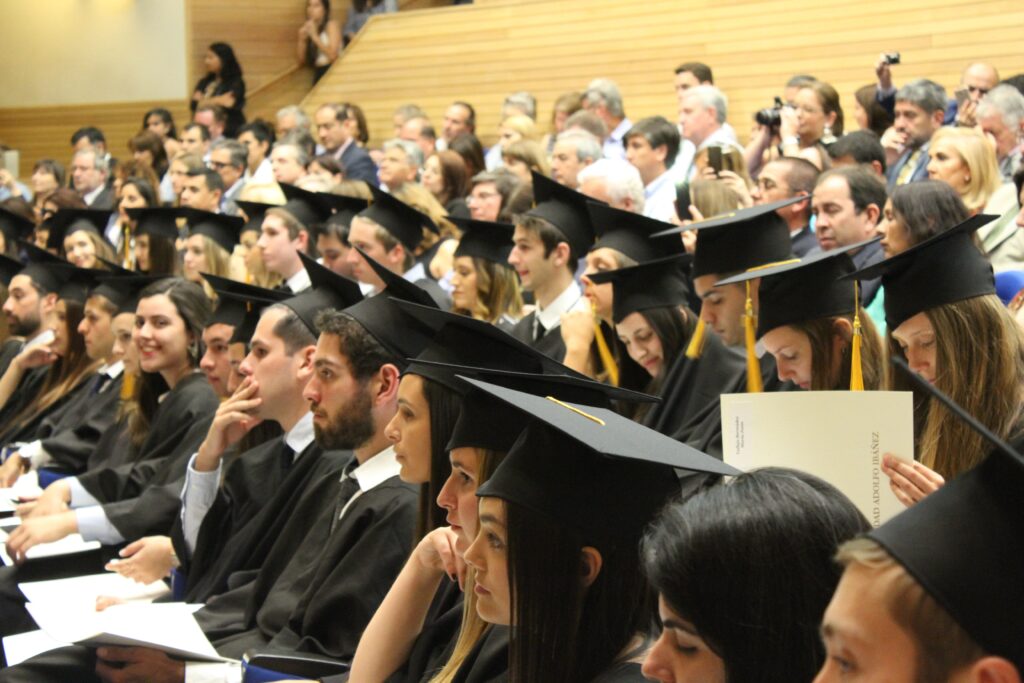
Let me first thank Professor Mény for his kind invitation to be here today. I accepted with great pleasure because the European University Institute is one of the crown jewels in my portfolio.
Today I want to talk about the future of universities in Europe. However, after the events in the past few days, it seems appropriate to also mention a few other interesting topics.
I know that these are difficult times for our Union, but I have no doubt that we will rebound and come out stronger than before, as we have done so many times in the past.
Centres of learning like the EUI are important to make this happen because you can help make the issues of European debate understandable.
For people like me, building a united Europe is a daily occupation.
Often, we have to run after the latest events and we have little time to take a pause for reflection.
I suspect that the public opinions in many countries of the Union suffer from a similar condition. Or at very least there is a high degree of confusion as to what is really being debated. Too often European issues are debated as if they were only about national interests and domestic politics.
This is a dangerous situation for everyone: for politicians, for opinion makers and ultimately for our citizens. Important decisions are taken on the basis of debates that are too narrow and too shallow.
It is absolutely urgent that we create a Europe–wide space for debate on how to move forward now. But this debate must be placed in the wider context – that is to say, the longer history of European integration, not just the last two weeks.
Five days ago, President Barroso gave a speech at Messina. He reminded us that, whilst it is 50 years since the Messina Conference – “where it all began”, so to speak – it is also 51 years since the French National Assembly provoked a shock wave through Europe by rejecting the European Defence Community.
The story of European integration is one of many setbacks and obstacles. Yet it is undeniably one of great success. Surely, the fact that I, a citizen of Slovakia, am standing before you today as a Commissioner, is proof of that fact.
But why am I saying this? Simply because, apart from the obvious need to communicate Europe better, we need to foster serious analysis of European affairs, as a basis for informed and objective debate.
This is why your work here is so essential. Of course, the same is true for countless universities and research centres across the continent. But the EUI is a multiplier, a key source of knowledge and learning for the European project. The presence of the Commission’s historical archives here is symbolic of that fact.
Ladies and Gentlemen:
Let me move on now to the broader question of Europe’s Universities.
These are challenging times for Europe’s universities: the Bologna process is moving ahead and the new impetus the Barroso Commission gave to the Lisbon Strategy has brought knowledge, research and education under the spotlight.
We are now charting a new course for higher education. In the past, our action focused on mobility; now the emphasis is shifting towards structural change and reforms at national and institutional level.
Of course, the Commission is not responsible for education and training systems. That is the unique responsibility of Member States. Yet, the Commission can play a key role in terms of facilitating change and promoting good practice. Indeed, the Community has the specific task under the Treaty of improving the quality of European education and training.
European universities face bigger challenges and stronger competition than ever before. We have fallen behind the US in terms of research
and, surprisingly, also in terms of access to higher education. Other competitors are rapidly growing, too.
We all know that universities are crucial for future growth and jobs, however at present they do not deliver their full potential.
There are many reasons for this gap, let me give you the main ones:
fragmentation in systems ;
insulation from market needs;
lack of flexibility;
over–regulation; and
serious under–funding.
Sweeping reforms are needed in order to change this picture. These reforms can follow two guiding lights: the Bologna process and the education and training strand of the Lisbon Strategy.
Last month, the Ministers of the 45 participating countries in the Bologna process met in Bergen (Norway) to take stock of the changes achieved halfway down the road to 2010.
The facts are encouraging. Most countries reported good progress:
More than half of the students are now enrolled in programmes that are in line with the new 3-cycle degree structure;
Almost all countries of the Union have made provisions for quality assurance systems.
36 of the 45 participating countries have ratified the Lisbon Recognition Convention.
But there is still a lot to do, this is why the Ministers did not add new priorities but decided instead to reinforce the pillars of the Bologna process.
The Bergen Communiqué highlights several aspects:
European higher education should be more accessible to all regardless of social and economic background.
higher education and research should open up to other parts of the world and become more attractive.
The development of doctoral programmes and synergy between the European Areas for Higher Education and Research.
Ladies and Gentlemen:
I will now turn to the quest of excellence, which is the core of our recent Communication titled “Mobilising the brainpower of Europe”.
I do not see excellence restricted to a few institutions; rather it can be spread among many universities specialised in different areas of research, innovation, teaching, lifelong learning, etc.
We should identify, link and support these networks of excellence. Of course, a pre-condition for this is greater differentiation within our national systems. In other words, universities should not seek to be excellent at everything: each should be allowed to play to its strengths
and concentrate on what it is good at – be it research, teaching, social sciences, nanotechnology or linguistics.
Not all universities can be research–intensive and not all should do the same kind of research. Excellence can only emerge from a culture of quality where talents of different sorts can grow.
The quest for excellence lies behind three initiatives which I would like to mention:
a new boost for doctoral studies;
the plan to establish a European Institute of Technology; and
the Commission’s support to new post–doctoral scheme right here at the European University Institute.
My Colleague Jan Potočnik and I intend to relaunch the idea of a European Doctorate Label. This would be awarded to doctoral programmes with a distinctive European outlook.
The emphasis is on doctoral schools with a critical mass, interdisciplinary scope, and an active interface with industry and society.
As to the EIT (European Institute of Technology), the Commission wants to bring together the best brains and the best companies in a world–class environment with a distinctively European character.
These are still early days for the EIT, we are only now preparing the consultation process, but I can tell you already that it will not be a sibling of the EUI for hard sciences and technology.
We do not intend to create a new institution; instead, we are looking at a network of our best centres of learning and research.
However, the EIT will also need a distinctive identity, so that its excellence can be recognised by the academic and business communities in Europe and in the rest of the world.
I feel compelled to inject a note of caution here though: the EIT is not an idea which can be launched “on the cheap”. It’s feasibility depends at least in part on the outcome of the current negotiations on the next Financial Perspectives.
Finally, let me come to EUI. As you all know, last April Professor Mény and I presented a proposal for a post–doctoral training programme in the social sciences that should open its doors in 2006—and I am looking forward to its adoption.
Named after Max Weber, the programme will prepare young academics for their future careers. In this way, it will also help European universities get ready to replace their teaching staff as the baby–boom generation goes into retirement.
These are the practical benefits, but the new programme will be a flagship for European academia in other respects as well. Starting in 2006, it will recruit 40 fellows according to specific topics that will be decided annually.
This will create a critical mass and the synergies that are possible only in large research facilities. In short, our brightest young minds will find in Fiesole a realistic alternative to post–doc studies outside Europe.
The programme is designed to become a model for other institutions in all these respects. We would like to see more programmes in Europe that—like Fiesole—offer an internationally renowned and attractive research environment.
Ladies and Gentlemen:
all new projects include an element of risk, but this time I feel we are betting on a winner. The EUI is already a beacon for Europe’s higher education.
We should multiply these examples because Europe needs to regain its position of leadership. We have no alternative but to invest in knowledge, education and research.
Our standards of living in the coming decades will depend on our choices today. Our very independence in the globalised world will be affected.
If we are serious about these challenges, we have to support our schools and universities, promote life–long learning, and foster centres of excellence like this one.
Let me add one thing here. When one calls for more investment in the knowledge economy the mind goes to science and technology.
Nobody can doubt that product and process innovation is crucial to win the competitiveness race on the international stage.
However, we need more than that. We also need to reflect on Europe’s political and legal developments, analyse the present and future state of our economies, investigate and interpret our history.
If we don’t understand our cultures and societies, we will not be able to map out our future. This brings me back to my opening theme.
Let us not forget that innovation, competitiveness and growth are means, not ends in themselves. In the end, it is values that will bind the Union together.
We need to increase our wealth to preserve and expand our social model, to affirm and disseminate Europe’s foundational values, to build the material foundation for a peaceful and creative society.
This is the mission I have in mind for Europe’s centres of excellence in the humanities. Inspired by example of the European University Institute, I am confident that we will succeed.
Thank you.