 English
  Slovenčina
 Lecture at the University of Ottawa
Ottawa, 5 June 2006
Ladies and Gentlemen,
Dear students,
Ever since I became European Commissioner in May 2004, I’ve had many opportunities to debate the topics included in my portfolio with audiences of all kinds.
As you probably know, my responsibilities include the policies of the European Union on education, training and culture; on youth and sport; on civil society and multilingualism.
I consider myself lucky, because these domains cover some of the most exciting and pressing issues of our time.
Of these, cultural diversity has a special place in my heart. I come from Slovakia, a country that has had its fair share of troubles to preserve its cultural and political identity.
Fortunately, after the decades spent as part of the Eastern bloc, history has been kinder to us. When communism collapsed and the iron curtain tumbled down, we have returned to freedom. This new era paved the way to unprecedented developments, but I’ll come back to that later.
Cultural diversity is an exciting topic both for politicians and for intellectuals. Politicians cannot ignore cultural diversity because it keeps coming up in many areas of public discourse; from trade and the new world order to domestic and regional policies—including those on education, social integration, and minority rights.
Intellectuals have a different challenge, because the phrase ‘cultural diversity’ is very broad indeed and, as consequence, rather vague.
These are not necessarily bad things. It is unlikely that ‘cultural diversity’ can become a specialty topic in the same way as computational linguistics; however, it has all it takes to be a stimulating area of interdisciplinary research.
So, it seems to me that scholars and policy makers must demonstrate the same set of qualities if they want to deal with cultural diversity: an open mind, tolerance and curiosity towards the other, and above all the ability to engage in constructive dialogue even with radically different positions.
For these and other reasons, I am particularly happy to exchange views on cultural diversity with you. I thank the representatives of this University for giving this opportunity to me—and I want to do it in French.
C’est un honneur pour moi d’être parmi vous aujourd’hui au cœur même de l’une des plus importantes universités bilingues du pays.
Son environnement multiculturel, avec ses professeurs et étudiants de tous horizons, ses programmes d’échanges d’étudiants et l’histoire même de la ville d’Ottawa illustrent parfaitement la diversité culturelle ainsi que ses valeurs telle que je la conçois.
A l’heure où les medias ne nous parlent plus que de mondialisation et d’harmonisation, l’Europe reste consciente de l’importance de cette diversité culturelle et c’est pourquoi elle s’est fixé comme objectif de la préserver et de la promouvoir.
Je tiens à vous remercier de m’avoir inviter à partager ce moment avec vous.
Everything indicates we have the perfect conditions for a stimulating exchange of ideas today—both politically and intellectually.
Ottawa is the capital of one of the most open and welcoming countries in the world and the University of Ottawa is its premier centre of learning.
Canada receives around 200,000 new immigrants a year. These are people who are drawn to your country looking for a peaceful and caring society.
Canada has a fair claim to become a model on the international scene for the way it makes the most of its rich cultural, ethnic and linguistic makeup.
As to the University of Ottawa, it is clear that it reflects the cosmopolitan character of your society. I was standing in front of Morisset Hall a while ago and I could see what it means to have students and faculty from over 150 countries on campus.
It feels good to discuss cultural diversity in a bilingual university like yours; which explicitly recognises the contribution of this country’s many communities.
On a more personal note, it feels good that your university has decided to study the specific contribution of Slovaks. I am referring, of course, to your Chair in Slovak History and Culture—one of the very few in the Americas.
Besides, how can this university not be at the forefront in cultural diversity? The border between English and French Canada is very close indeed and it must be a constant reminder that diversity is part of everyday life.
This national capital region, straddling the river and two provinces, is proudly and confidently bilingual. It reminds me a bit of Brussels—the place where I now work and live—so close to French– and Flemish–speaking communities.
Both cities show that the line between one’s own and the foreign is not as sharp as many would have us believe. In Brussels and in Ottawa one can understand a simple but important truth: a genuine attitude of openness towards the other really begins at home.
If you are used to negotiating different visions of the world with your fellow countrymen and women, then it will be easier to carry over this positive attitude with fellow human beings from any other part of the planet.
Unfortunately, the opposite applies as well. Many acts of discrimination are committed by individuals with a twisted sense of cultural identification within their own communities.
These common views between Canada and the EU underpins our long history of co–operation. I would just like to note that our first agreement—it was about education—goes as far back as 1976.
Building on our past success, we are now looking at a broader dialogue which, when the new agreement enters in force, will also make room for actions for young people and policy–oriented activities to complement co–operation in education and vocational training. The new Agreement should be seen as much more than just a continuation of what we have been doing so far. We should therefore also be working together level towards preparing the introduction of various innovative aspects of the new scheme. Such innovation could give rise to the award of joint transatlantic degrees by a European and Canadian university, whether at undergraduate or masters level.
Ladies and Gentlemen:
I have begun to draw a parallel between the meaning of cultural diversity here and in Europe; but first I would like to tell you about the role of cultural diversity in Europe’s past.
Europeans have had to share a relatively small space with each other for many centuries. As a result, a salient feature of our continent is that it has always been a mosaic of cultures in constant flux.
Living side–by–side as we have done for centuries, we’ve had to come to terms with each other. This has had two starkly contrasting effects:
- Often cultural differences have been the reason—or the pretext—for tensions and wars, including some of the worst atrocities the world has seen.
- At the same time, we have also learned a great deal from each other, and this has made the peoples of Europe brighter, wiser and stronger.
Far from being a contradiction, these two facts are a testimony that cultural diversity, dialogue and confrontation are part of our genetic make–up.
This contrasts with a current view that we have inherited from the nationalist movements originated in the early 19th century. This tradition regards Europe’s cultural map as a set of pretty uniform communities enclosed within national borders.
In this view, the Nation State is identified with a language, a history, and a set of values and habits that have been described as the national spirit or character.
Of course, in this view there is hardly any room for the languages, the histories and the values of others—except on the other side of the border.
This representation of cultural unity is now losing ground under the double pressure of the hard facts of history and their interpretation in academic and intellectual circles.
In the age of globalisation, there is wide and growing consensus that there is no such thing as a pure or uniform culture. Cultures thrive on hybridity.
This is especially true in Europe. Each culture that Europe has seen has always been a highly diverse mix. I will give you just one example of what I mean, and because we are so close to the linguistic border, it will be about an episode in the history of the English and French languages.
After William the Conqueror became king of England, on Christmas Day 1066, French became the language of administration and high culture, while English lost prestige and continued to be used for everyday purposes.
The two languages would live and develop side–by–side in England for the next three centuries or so.
During this period, the English language received about 10,000 words from French. Some estimate that, today, an English native speaker who has never studied French already knows 15,000 French words.
There are countless episodes like these in Europe’s history. Sometimes they are presented to support this or that claim to superiority. These claims are often motivated by present interests—rather than past events—and they are invariably groundless.
In fact, these stories illustrate the words I chose for the first half of my title today: diversity is the inevitable legacy Europeans have received from their past.
Ladies and Gentlemen:
Cultural diversity is a state of affairs here in Canada, back in Europe, and elsewhere in the world. What we think and we do about it, is another matter altogether—and this is entirely in our hands.
The argument I’ve been giving you boils down to one simple statement: in the past, Europeans have used cultural diversity to grow smarter and richer; and they have used it to bring death and suffering to each other.
The mind goes to WWII, of course, at the end of which the continent was down to its knees. Then, the most enlightened political and intellectual leaders realised that Europe would not survive another modern war.
To ensure peace in Europe a process was set in motion which has led to the European Union as we know it today. Today’s European Union is more European thanks to its enlargement.
Half a century has passed and things have changed a lot; however, peace is still the single most important reason for our process of integration.
Robert Schuman—one of the founding fathers of Europe—was perfectly clear on this point; he once said: “war between France and Germany [should become] not merely unthinkable, but materially impossible”.
In their effort to integrate, the countries of Europe have given up some of their sovereign powers and pooled them under common institutions. The breadth and depth of this geopolitical innovation has no precedent in history.
Our institutional arrangement is equally unprecedented. The EU is not a federation, but it is much more than a trade block such as NAFTA or a forum such as the Organisation of American States.
In the past few decades, the Union has had an immense power of attraction across the region. The original six members have now become 25 over five waves of enlargement.
This is the part of the story I began to tell you at the start. Slovakia—my home country—joined the Union on May 1, 2004 along with nine others.
We all embraced the Union because it stood for peace, democracy, and freedom.
So, to us the master plan for Europe was not of mere historical interest, but the living promise for a better future.
Over the past 50 years the Union has grown both larger and deeper. What started as an economic community is now an organization with significant political features.
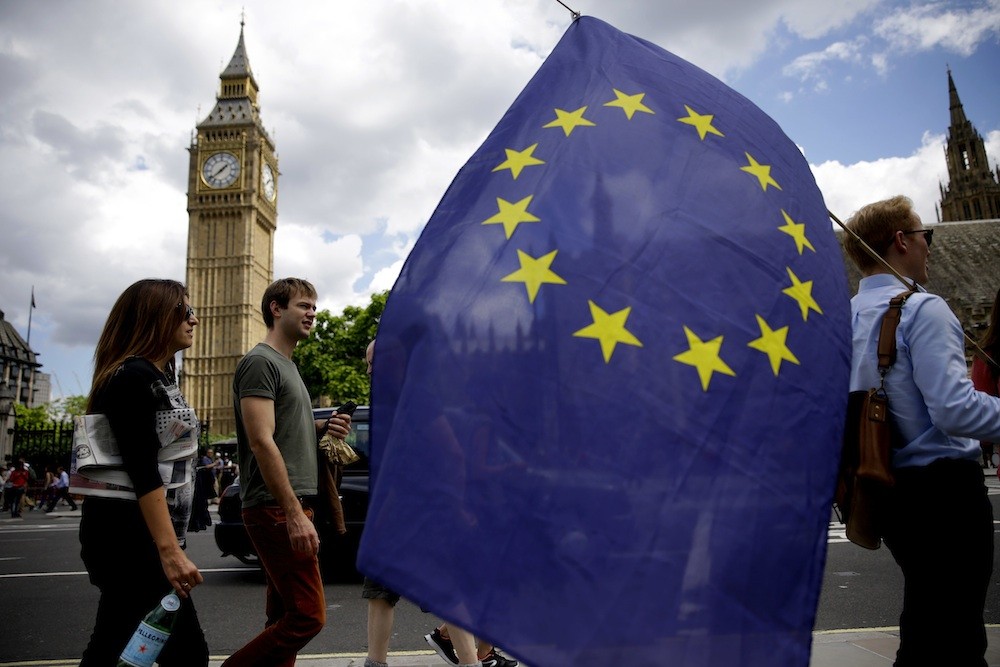
We have common legislation, a single market, a currency, a flag, and a Parliament directly elected by the people.
We are working on a common foreign policy and on military capabilities. So, the next question is: “What does the Union want to be?”
The difficult months that are behind us prove that the answer is dramatically elusive. Is it the case that a Union of 25 countries is growing too diverse? Have we lost our sense of direction?
This is the deepest political sense of the question before us today and explains the second half of my title today.
The future of the EU hinges on our ability to understand and manage diversity—cultural, economic, and political. Even our motto reads ‘united in diversity’.
Diversity lies at the core of the debate we have launched to close the period of reflection which followed the rejection of the Constitutional Treaty by French and Dutch voters last year.
Last month the European Commission—which represents the common interests of the Union—formally called on the Member States to renew their commitment to Europe.
We suggest that national leaders sign of a joint declaration 50 years after the Treaty of Rome, which is regarded as the birth date of the Union.
In the life of an individual, the 50th birthday marks the height of maturity, but for a historical process like the EU it is a very short time indeed.
What I mean to say is that we are not looking at a mid–life crisis, but at a stage of development somewhere between childhood and puberty.
I am confident that as the countries of Europe will create better conditions for the Union to grow up strong and healthy.
Ladies and Gentlemen:
There is a lot the European Commission can do as well. Over the past twelve months, we have realised that there is a gap between what Europe really does and what the media and the people think it does.
The obvious solution it to centre our action around what we have called a citizens’ agenda. This includes policies and actions that will deliver results for our people and revamp the role of the EU in the world.
Everyone agrees the EU is at a crossroads in its process of integration: there are many ideas of Europe, many competing interests, many directions for the future.
Let me reprise my earlier argument: diversity is a fact of life and what we do with it is entirely up to us. So, shall we steer towards division or towards unity?
I believe in the power of will and determination. I also believe in the power of rationality. So, if you ask me, I would bet on unity.
It stands to reason that the Union will be the decisive factor for the security, prosperity, and solidarity of the continent in the coming years. In a globalised world, we simply don’t have an option.
I am also optimistic that the EU will find the willpower to turn the page and strengthen the bonds that keep together its countries and regions, its institutional systems, and above all its peoples.
Here, I want to put the stress on the people. Much of the current stalemate—such as on Europe’s institutional arrangement—can be resolved by governments, social partners, and other representative bodies.
But these issues are far from the real concerns of the people, who perceive the debate on a Constitution for the EU as remote and obscure.
If we are serious about the long–term success of a united Europe, we need to bring the process of integration down to the people.
I would like to tell you about one initiative that is currently in the pipeline: the European Year of Intercultural Dialogue.
I called for a Year of Intercultural Dialogue as soon as I took office in 2004. Since then, the need for dialogue has become more pressing and now many regard it as crucial for the future of Europe.
The Year of Intercultural Dialogue is now planned for 2008 and will cover three main areas:
- First, we will encourage the members of the Union to talk more to each other, especially involving the civil society and the countries that joined most recently.
- Second, we will encourage dialogue between the Union and the rest of the world.
- Finally, we will encourage better forms of dialogue in our own societies, especially with Europeans of recent immigration.
I would like to stress the second point, which is about dialogue and international relations.
There is no doubt in my mind that dialogue should be the core of international relations, which work best when there is a genuine understanding of the culture, the motives, and the aspirations of the other.
If we are serious about bringing peace and prosperity to our complex world, we should learn to listen to each other, engage in dialogue without preconceptions, and restore the primacy of human dignity for all and everywhere.
I know these words of mine will find sympathetic ears in this hall. As I said earlier, Canada has every reason to be proud of its intercultural policies and the rest of us have a lot to learn from your experience.
What can bring us closer together is a culture of human rights, of security through their promotion and effective implementation.
It is also a preference for the rule of law and diplomacy over other forms of policy–making.
Before I close, I would like to mention an important development in this context; the UNESCO Convention on the protection and promotion of the diversity of cultural expressions adopted at the end of last year.
I would like to take this opportunity to note with pleasure that the positions of the EU and Canada have coincided all along the negotiations and beyond.
I also welcome the fact that Canada has already ratified the Convention. I am confident we will soon have a new pillar of international law which may make the difference in the quality of international relations in the XXI century.
Ladies and Gentlemen:
I’ve been telling you about cultural diversity and intercultural dialogue in the EU. At the end of this talk I would like you to bring home just one important message.
Cultural policies rank high in the domestic and international agendas of the EU and their importance will surely grow in the future.
Europeans will always be busy getting to know each other because the Union is not—and will never be—about erasing the differences between its countries and peoples.
Recognising and respecting cultural diversity lies at the foundation of our common idea of Europe.
And because nemo dat quod non habet, we need to make cultural diversity a reality at home if we are serious about following it as a beacon for our international action.
Cultural diversity is Europe’s richest legacy from the past and the crucial asset with which we can build a future of prosperity, solidarity and security—both internally and externally.
Thank you.
Related posts:
 Is there a European culture?
 EPP-ED Hearing on Cultural Diversity, Religions and Dialogue
European identity, intercultural dialogue, and religions
Unity and Diversity: Europe’s Approaches to Culture and Languages
EPP-ED Hearing on Cultural Diversity, Religions and Dialogue
European identity, intercultural dialogue, and religions
Unity and Diversity: Europe’s Approaches to Culture and Languages
 European Values in the light of the EYICD 2008
Towards an EU Strategy for Cultural Heritage
European Values in the light of the EYICD 2008
Towards an EU Strategy for Cultural Heritage