 Slovenčina
  English
 Konrad Adenauer Stiftung
Brussels, 14. October 2008
Sehr geehrter Herr Vize-Präsident, Eccelenza Arcievescovo, lieber Peter Weilemann,
Distinguished Members of Parliament,
Representatives of the European Institutions,
Ladies and Gentlemen,
The topic of migration brings first of all an invitation to cooperate, to share the best practices, open minds and hearts and look for the ways ahead. To speak about the responsibility of Christians and Christian values as a basis for long-term policy of integration is a call to get inspiration from the founding fathers and decades of cooperation which brought this legacy. Because, a common Europe, freedom, democracy and rule of law are not granted. It’s a result of difficult struggle and it will not function automatically. It must be responsibly developed further, generation by generation.
One of the best answers is to participate and share responsibility. There is European Union summit tomorrow that really will give answers and not only comments or laments over the problems of the time. Our fathers would love to have these problems. They couldn’t come to this point, at least many in Central – Eastern European former communist countries. We have a totally different agenda then they had. I’m happy that today we can be a kind of attractive space for many in the world. The more developed Europe is, the more attractive it becomes. It is something we have to share not just by simplistic approach but by transposing universal values, European experiences, inspiring methods and ways for cooperation and elimination of the temptations of the past: from Europe as a problem yesterday to Europe as a solution today.
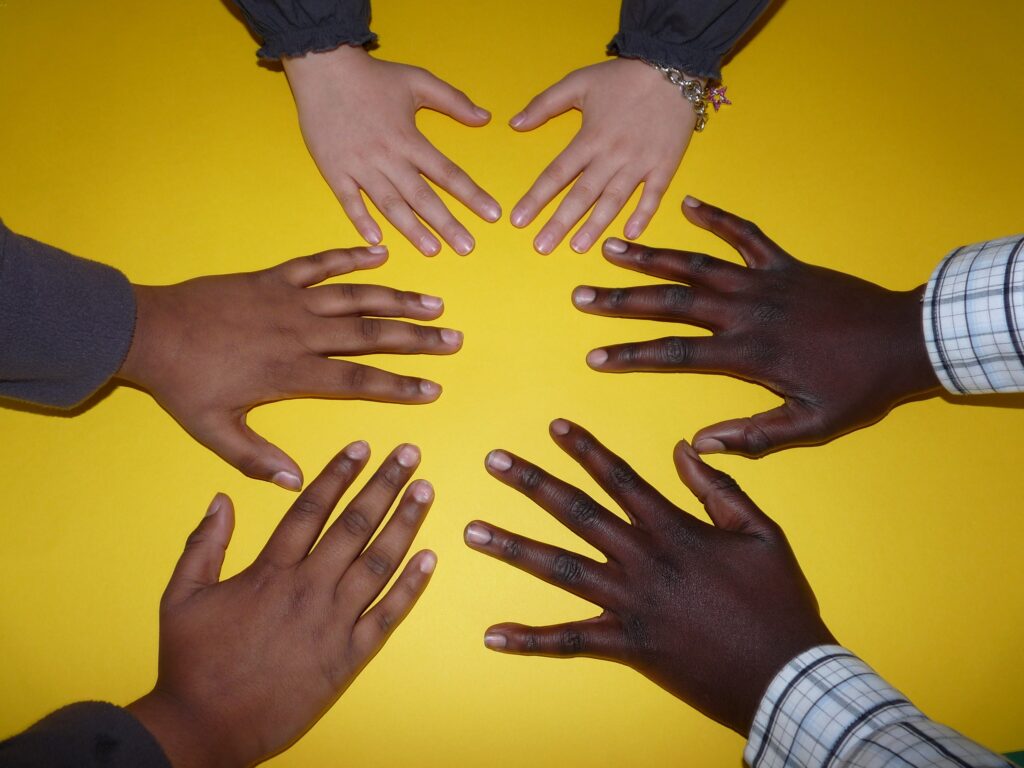
The European Union is the most important geo-political innovation since the Westphalian system of international relations was established more than three centuries ago: shared sovereignty, cooperation based on law and not on dominance of powers, common values starting with universal human dignity. The best narrative for such cooperation is unity in diversity. I’m saying that because this is not only about a small space. This is about the global principles that we are all different, even in this “Salle des Glacés” in Brussels. Everybody is original and unique. But we are all equal in dignity. This is the pattern not only for intra-European but also for the global universal relations. If this prevails then we are on the track towards respect and dialog, towards inclusion and not exclusion or exclusivity, not closeness but openness.
Within the European Commission I am responsible for the Youth policy. But main competences have the EU Member States. We help the Member States; we assist, support and sometime coordinate. An Open Method of Coordination is the instrument established under the EU youth policy. The previous program was called ‘Youth’, the current one is called ‘Youth in Action’. You can see the difference as more action, more access and more dynamic approach is foreseen in current program.
In my portfolio, which besides the youth includes education and training, culture, sport and citizenship, youth is explicitly mentioned for the first time. Since the beginning of my mandate, I have emphasised youth issues giving more recognition to the Youth Policy aspects, which are linked to Article 149 of the EC Treaty, “Education, Training and Youth”. Hopefully, in the coming time there will be also sport in the Article 149. This is the proposal introduced by the Treaty of Lisbon.
All these areas are ‘soft’ policies, not powerful, but very meaningful for integration. In this way, because they are meaningful, they are powerful.
Education unites, Bildung verbindet, l’enseignement unis, vzdelanie spája… This is true locally and globally. Educated people are more prepared for integration – to live in diversity. Not only to exist in diversity.
Access and quality of education are the factors and catalysers of integration. As the Archbishop Marchetto mentioned, the integration is not negation or negative expression of someone’s identity. Integration means first of all participation as equals, and not absorption or assimilation. In European policies the youth aspects are getting a higher profile. It’s not a total and definite answer, but it’s a beginning or more coherent approach. We need to see youth as a space of responsibility for many actors.
The first ever legislation in the youth field is to be adopted in November at the Education, Youth and Culture Council meeting. It’s the soft legislation, but I’m not claiming that we need directives. We are to adopt Recommendation on youth volunteering in Europe allowing better conditions for more voluntary youth work. This will be very beneficial to young people as a form of participation and exchange, social inclusion, social work and non-formal education.
The world and Europe are changing – creating new opportunities and new challenges. Our societies are ageing, people live longer, but birth rates in many European countries are declining. In this changing environment young people are more equipped with energy and enthusiasm for the future, but also many of them are marginalized. Many of them are simply more vulnerable because of realities like unemployment, which is in the youth age interval twice as high as the overall unemployment rates. We have in the European Union of today up to close to 15% early drop outs in the schools. It’s close to six million young people who leave school early. You can imagine, the six million annual numbers means further consequences in life, further problems in their individual or family or community lives. Close to 20% 15-year olds are achieving very low results in reading literacy. This is one of the first competencies to participate further in education and lifelong learning. These are exclamation marks for our education and training systems.
There are many young people with fewer opportunities, sort of marginalized. There are many causes of exclusion: poverty, difficult family context, physical and mental health problems, disabilities, life in disadvantaged urban or rural areas, ethnic background, etc.
Migration is a growing phenomenon. It is one of the key issues for the future of Europe. We discuss it frequently: Is there a future and what kind of future? Is it foggy? Is it positive, constructive and perspective? Migration was defined in Hampton Court under the British Presidency as one of the strategic areas of EU policies together with energy, security and other important issues.
When there are difficulties then for the migrant children usually they are even more acute and serious. Reality shows that they have more troubles. They do less well in school than their native peers, they leave school earlier and they enrol in fewer numbers to higher education. Many children from disadvantaged minorities, like Roma (Gypsies), experience the same problems. There was the first Roma summit on September 16 with a fruitful discussion and a lot of new elements for education and social policies. Director Peter Weilemann mentioned examples and problems of Germany. There is a diversity of examples of inclusion or integration in Germany.
Migration is a real challenge for education. Once again, the access and quality of education are decisive factors for the success of integration. In some countries we observe very negative phenomena: the second-generation children in migrant families or communities have worse results than the first generation. So the divergence and gap are growing. We saw it in the last PISA study. This was quite a negative tendency from the last study. The next PISA study will be built up in 2009 and published later on.
What is the EU response? I already mentioned we need to focus on youth and on the related policies around. One of the contributions is to get cultural aspects more into the domain of cooperation. This year is the European Year of Intercultural Dialog. It shouldn’t finish by December 31st. What we need is more intercultural respect, dialog, skills and competencies in schools. When youths are taught in these competencies, they are better prepared to live in diverse communities.
I also would like to remind what Archbishop Agostino Marchetto quoted from Jean-Jacques Rousseau about the ignorance of cultures leading to potential conflicts. It is always true. Ignorance breeds intolerance, and then we face further problems. We need to promote the intercultural approach. This is important contribution and we want to achieve a long-term strategy, long-term orientation towards intercultural approach. We need a stronger culture of dialog in our societies. Dialog as a daily issue and not as ceremonial, eventual issue, sometimes or somewhere… Dialog must be a part of our daily communication and culture.
I would like to mention one great example of integration, as a model for schools. We all know the Schengen system which was enlarged since last December to new Member States. There is Schengen lyceum in a border region of Germany in Perl, in the neighbourhood with Luxembourg. Since last September children from different countries study together in this multilingual lyceum with multi-national staff applying modern methods. This is about real integration! Not only elimination of borders but living together, knowing each other from early childhood. An inspirational example for all of us!
As the EU response to the needs of young people, “Youth in Action” is a good programme, significantly stronger than the previous one, with budget of 815 million euro for seven years period. It has the full integration of young people as an objective. It promotes young people’s active citizenship, European citizenship in particular. It promotes solidarity and tolerance among young people, foster social cohesion and mutual understanding between young people in different countries.
This is only one of the EU responses and there are many other programs encouraging young people’s participation. The most popular is Erasmus program with some cousins or relatives like Comenius, Leonardo da Vinci and Grundtvig, which help students, teachers and scholars to study abroad and to get better prepared for living in multicultural Europe. Mobility becomes a part of the preparation for career, for social inclusion and for European integration.
Just last year we supported more than 300 000 young students and trainees and more than 110 000 teachers participating in programs like Lifelong Learning, Tempus and Comenius. I also strongly encourage Member States and their ministers to use European Social Fund resources more for education and through education for social inclusion. Because, education is one of the best equalizers in life and society. Lifelong learning has become a necessity! If we want to improve social situation, the education is indispensable. How to develop flexicurity if not through education? How to achieve the Lisbon Strategy goal for more and better jobs if not through more and better education? These are very important principles for the support of access, relevance and quality of education for all.
Next month together with Doris Pack from the European Parliament we will launch “Comenius Regio”. This is a programme for regional cooperation of schools across borders, promoting exchange of experiences and good practices between the regions and municipalities in Europe and promoting mobility of secondary schools students. I hope it will bring as similar fruits as we got in Erasmus. Erasmus started with 3 000 young people in 1987. Just to mention: Today in Milan I met the vice-rector of Bocconi University. He was the pioneer in the first year of Erasmus. Now there are kids of Erasmus students. After 20 years we’ve got numbers like 160 000 annually and close to two million altogether. There is a new generation and I hope with Comenius we can bring more social inclusion in Europe.
Sport is also an important way for young people’s inclusion and integration. It is a great and popular instrument. It generates the same values that we need for a sound citizenship: tolerance, participation, fairness, sense for the rules, solidarity… But we see also negative actions around: doping, violence, racism… We have to promote sport for all and its great social function.
In the political sense the Commission proposed in recent years very important messages. Some of them were accepted and adopted in the conclusions of ministers, for example, on equity and efficiency in our education and training systems: not as a kind of contradiction or trade-off but as a dual objective. Efficiency and equity are very important because we have to look at how we spend money and also whether we allow access for all. A dual objective, because if only one is promoted, it leads to egalitarian results or if only the quality is followed, it leads rather to an elitist approach. Both, access for all and quality in education as a shared objective are needed!
We have some important messages also for the pre-school education. This is the most influential part of the educational chain. There is a well known book of Robert Fulghum with a very telling name “All I Really Need to Know I Learned in Kindergarten”. And for children from economically and socially disadvantaged communities or families this has even more decisive role. If we want to make a difference in, let’s say, Roma or other migrant communities, early age education is the most efficient time and part. It is easier to say and more difficult to achieve, but this is about equity and efficiency. It’s very important to see the system as a whole and to look how we can achieve better results with a more integrated approach.
We have adopted and approved key competencies for lifelong learning. It starts with mother tongue literacy, knowledge of foreign languages, MSTs (mathematics, science, and technology) and digital literacy (to be able to use new technologies and not excluding from modern, fast communication). Of course, to command technology is not enough. It was Martin Heidegger who said “Technology has overcome all distances but didn’t bring any closeness”. For closeness we need other skills, such as learning to learn, initiative-taking, interpersonal, societal and social, intercultural competencies. After approval it should become part of further curricular reforms in our schools and especially in relation to migrants’ children.
School is a key place for integrating young people. This year we have proposed school communication on the competencies for 21st century, kind of agenda for European cooperation on schools. It should lead to a more central role, recognition and support for schools in our societies because the value of schools is much higher than usually recognised.
Commission also proposed a Green Paper on migration and education to discuss how the challenges may be best addressed in Member States and through European action. It is opened for the consultations until the end of this year and is a kind of signal for all of you to bring some answers to the European Community, how we can improve policies and cooperation in this framework. The last legal instruments on education of migrants and their children were adopted in the EC in the 1970s. Since then we have moved a lot, and the situation has significantly changed.
I want to conclude by saying that tendency to cooperate and to share is growing. I am really glad because it was not so easy to share, for example, data and benchmarking. Today we are looking where we are trying to improve, not only commenting but really moving on. There are many good examples of the changes that are coming. For example, the Bologna Process became pan-continental. Other countries from non-European space have applied for membership like Israel and Kyrgyzstan. Recently we had the first Euroskills competition, a kind of championship in skills. We have championships in football or athletics and that is good. But general and vocational skills are necessary for the future labour force. Skills are so important. In times of financial crisis many people say “remeslo má zlaté dno”: skills have value of gold. Money or accounts may be lost and disappear, but skills and skilled people have a real fortune for the future literally in their hands.
Next year 2009 will be a very inspirational topic, the European Year of Creativity and Innovation. We should use it for promotion of talents, tolerance and access to education, which is so important to all and especially for the youth.
Last but not least, we should promote youth policies with young people, with youth together. Not for them only, but with them. This is a realistic and mature condition for implementation. Since the Finnish Presidency in 2006 we organize a regular structured dialog with young people. At the beginning of November we will have the European Youth Week in Brussels promoting dialogue between EU institutions and the European Youth Forum and young people from all program member countries. The main point on the agenda is further preparation on youth policy after 2010. We consult cooperation framework for future youth policy. It should be, as I said, with youth and not only for youth.
Here we need all, not only European institutions but also Member States, public authorities, regions and municipalities, schools, families and also civic society. We need the support of NGOs, religious communities, churches and all who believe that youth is the future.
Here I would conclude. We are frequently saying that youth is our future. But we have to bear in mind that the future always starts today and not tomorrow. Tomorrow is the second best option, but today, now starts any future. So, youth is our present, too. In English there is nice etymological wordplay. Present means also ‘gift’. Young people, our children, are our gifts. We should value it and care for the gifts we got!
Thank you very much.
Podobné články
 Education: the Key to Europe’s Future
 Youth policies in Europe and beyond
 Education – key for fostering respect and understanding
 Launch of Comenius Regio Partnerships: new opportunitiesfor regional cooperation in school education
 The future of European Higher Education beyond 2010
 EPP-ED Hearing on Cultural Diversity, Religions and Dialogue