 English
  Slovenčina
 Launch conference of the Lifelong Learning Programme
Berlin, 7 May 2007

Distinguished guests,
Ladies and Gentlemen,
I am very happy to see the strong commitment of Germany, the current holder of the EU Presidency, to education and training. Education and training are crucial for Germany, but also for the EU. I am also grateful for the support of the Council and the European Parliament because we have the new programmes ready in time. We have learned from our past experiences with programmes in order to meet the challenges of the future.
Among all the things that public authorities do, nothing touches people quite like learning; whether it be in schools and universities, in training centres, or in other, less formal settings. Learning involves parts of our selves that other activities cannot reach. Let us consider one thing: it is possible to go to work just for the sake of pay—it is not advisable, but it’s possible.
In contrast, it is not possible to understand a concept or acquire a skill if you are not driven by strong enough motivation. You may sit through a lecture, but the learning does not happen. Moreover, it is not enough that this motivation sits in your mind only; you must bring your mind and your heart to class. And this is because you should be open to change.
It is a fact that learning—when it works—will change you. You extend your knowledge, you learn a craft, you become wiser and more critical. In a word, you become a better person. We are born as humans, but we have to become personalities, citizens.
I also liked your idea to take an exhibition of successful projects among the people at the central station. Your choice highlights another unique aspect of education and training.
This policy field reaches out to people in their everyday lives; it is humble, unassuming and profoundly democratic.
Besides, I liked your choice because talking about education in a railway station triggers powerful metaphors.
Travel is often associated with learning and discovery. Let us just think of Darwin’s voyage on the Beagle, which revolutionised modern science.
Or—to mention an eminent son of this city—let us think of Alexander von Humboldt, whom Darwin himself called “the greatest travelling scientist who ever lived”.
The association works on deeper symbolical levels as well. Intellectual curiosity and an insatiable thirst for knowledge have been described in terms of travel since the time of Odysseus; at the very roots of western civilisation.
Ladies and Gentlemen:
These are some of the thoughts inspired by these Berlin festivities. But although the learning experience will always be about personal growth and development, it is becoming increasingly important for the development of our communities too.
It is clear that knowledge and skills are the foundations on which we are building our united Europe. “Bildung verbindet” – it really does unite us.
It is also clear that the success of our enterprise will depend on the quality of our education and training systems, on our creativity, and on our capacity for innovation.
Every decision maker in Europe agrees that education and training are crucial for economic growth and jobs and they will be more so in the future. As a consequence, EU policies in these domains have been gaining prominence in the last decade.
There is no longer any doubt that lifelong learning is at the very core of the Lisbon strategy and therefore close to the top of the Union’s political agenda. Lifelong learning is a necessity, not a luxury any more.
Future historians will certainly label our time as the age of knowledge. Sweeping changes are transforming our economies. The main factor in wealth creation has shifted from brawn to brain in virtually all sectors.
No European country is large or strong enough to step into the knowledge era by itself. Given the scale of operations of our global competitors, it is not sensible for any individual EU member to go it alone; all Member States recognise that they can advance more rapidly and more surely by exchanging ideas and experience at individual, institutional and governmental levels. This is equally true for EEA and Candidate countries, of course.
In short, the challenge is global and the response must be European.
The best example I can give you is the drive to establish genuine European areas in Higher Education, Research and Innovation. Establishing a European area implies tearing down barriers that hinder the circulation of students, trainees, scientists and scholars.
Europe’s scientific and intellectual potential will benefit from the circulation of ideas, the allocation of investment, and the commercial exploitation of research results—not only in the field of higher education but in all areas of lifelong learning.
I want to clarify one important point here. The impact of education and training is not limited to the growth of Europe’s GDP or the unemployment rate—crucial as they are for the wellbeing of our communities.
Our learning systems are also essential to give everyone living in Europe the opportunity to integrate in our societies and give their full contribution.
This is an urgent task now that the EU is growing more diverse thanks to the enlargements of recent years and the migrant flows from outside our borders.
Moreover, our learning systems are essential to give Europe viable political and cultural prospects.
It is in our schools and universities that the values that keep Europeans together are preserved, discussed, and handed down from one generation to another.
I am thinking about solidarity; tolerance, openness, and curiosity towards the other; and an enduring commitment to peace.
Finally, it is in our centres of learning that these values are questioned, scrutinised, and renewed to keep pace with historical change.
The function of robust and lively learning systems is not only that of finding good answers to the pressing questions of the day.
Their function is also—and perhaps more importantly—that of looking far into the horizon and spotting the questions that nobody else can see.
Ladies and Gentlemen:
Because of all these reasons, it is only natural, that education and training—broadly defined—should be among the policies of our Union. However, this has not always been the case.
The Treaty of Rome provided only for vocational training in the context of the mobility of labour within the common market.
Education policies were totally absent from our foundational laws until the Maastricht Treaty of 1992. For more than 30 years, education remained exclusively within the powers of Member States.
Some programmes came into existence as early as the first half of the 1980s. Erasmus was one of them, which has since become our flagship programme. Incidentally, 2007 also marks the 20th anniversary of Erasmus.
In time our policies matured around new and bolder concepts such as the knowledge–based society and lifelong learning.
These concepts underpinned the second generation of programmes—Socrates for education and Leonardo da Vinci for vocational training—both running for the period 2000 – 2006.
Europe–wide cooperation was needed in higher education as well, but progress in that area was to be achieved via intergovernmental action.
I am referring to the Bologna process, which started in 1999 and aimed to create a European area of higher education by the end of the decade. The key issue here, of course is quality assurance.
And it is notable how much interest there is now outside Europe in the Bologna: many countries wish to join of cooperate.
When the latest generation of the EU education programmes was being designed, in the late 1990s, the level of policy ambition was much lower.
The changes which have taken place since then have been nothing short of revolutionary: the launch of the Bologna and Copenhagen processes are transforming higher education and vocational training across Europe.
Member States, working together with the European institutions, have set up an ambitious policy framework—the Education and Training 2010 work programme—which helps countries learn from each other and improve their policies and practices together.
We should not relent in our efforts, because Europe’s education and training systems must tackle and win the challenges they face. Let me touch upon some of them.
First, there is the challenge of demographic change. With a shrinking population and a growing number of jobs requiring high–level skills, we should provide good education opportunities to all, irrespective of origin, social background, or age.
The second big challenge will be how to combine efficiency and equity in our systems of learning. We cannot have one without the other, because we need a broad base alongside cutting–edge research and education.
Thirdly, there is innovation. It is essential that we integrate the three sides of what I call the knowledge triangle: education, research and innovation.
We have to develop centres of excellence and improve cooperation between universities, research centres, and business.
This is the rationale behind the European Institute of Technology—or EIT— which was proposed back in October 2006 and is now being discussed by the other European institutions. In this respect, once again I must say how pleased I am with the commitment of the German Presidency.
The EIT will bring together research, business and education at the highest level of excellence
However, let me repeat, there will be no research and innovation without a broad and constantly updated knowledge base.
We have to aim for quality education across the board; from pre–primary education all the way up to the most advanced centres of excellence.
The Lifelong Learning Programme which we are launching today is the main vehicle for supporting these policies. I believe that, with it, we can achieve both a qualitative and qualitative increase. For example, we aim to triple the level of Erasmus exchanges by 2013 – in Germany there have been about 250.000 Erasmus students so far.
What will Europe’s education and training landscape look like in the years and decades to come?
What I have in mind can go under three headings: broader policy scope, mobility and continued work on innovation.
Firstly, I can see the need to extend the European debate to other areas such as pre–school, school education, and teacher training.
Secondly, we will keep removing obstacles to mobility. For instance, the European Qualifications Framework, which we expect will be adopted by the end of the year.
Thirdly, there is innovation, which is the number–one priority if we are serious about our success in the knowledge era. A number of initiatives have innovation at their core, for example the EIT which I already mentioned.
Ladies and Gentlemen:
I would like to conclude with a historical reflection.
50 years ago the Rome Treaties were signed: in the Western part of Europe, the process of unity in freedom began. Also 50 years ago, Sputnik was launched, a symbol of a system of unity without freedom. We should remember this, for the sake of the future. “Bildung verbindet” – this is important everywhere. In closing, I would simply quote Jean Monnet:
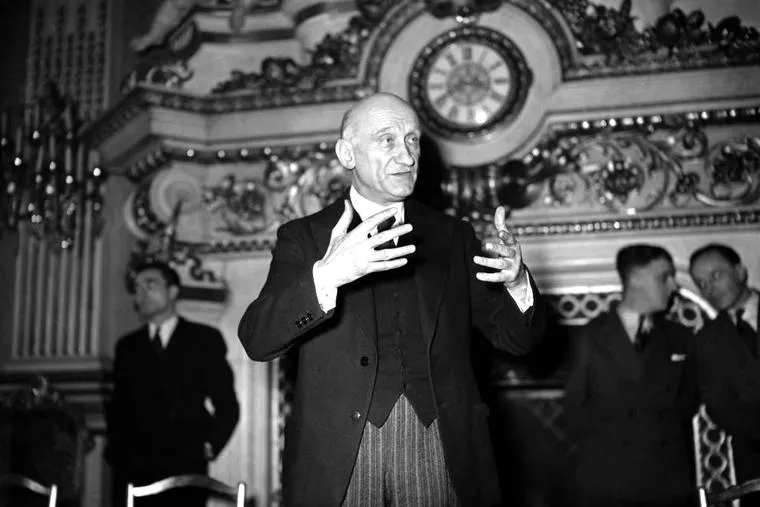
“Nous ne coalisons pas des Etats, nous unissons des hommes.”
Thank you.