 English
  Slovenčina
 12th Forum 2000 Conference: Openness and Fundamentalism in the 21st Century
Prague, October 12, 2008
Honourable President Havel, Excellencies,
Ladies and Gentlemen,
It is an honour and a pleasure for me to speak at the opening of this 12th edition of Forum 2000. I would like to thank the organisers for their kind invitation, especially President Havel and Professor Sasakawa. I am privileged to speak together with Prof. Mary Ann Glendon and to meet many other distinguished personalities. I wish we all feel here – At Crossroads in Prague, at home. The unique space in this old church of St. Anna connects us with the ancient roots of our culture. And we all daily go through many crossroads. They are part of our lives, and represent questions and challenges in our lives which we have to respond to and bear the responsibilities for the decisions on the orientation in the life. We should remember where we are coming from and, analogically, know where we are heading to.
This year, you put a difficult question on the table; and I commend your acumen and courage for doing it. The tension between openness and fanaticism, in all its facets, is among the defining issues of our time. The presence of many distinguished guests from around the world here in Prague testifies that we are dealing with a truly global phenomenon. And Forum 2000 confirms its role as the place where we come to look more clearly into the challenges of our global era. Twelve years ought to represent the age of maturation and completeness.
In Europe, we try to develop a common approach towards fanaticism and obsession, be it ethnic, religious, atheist, ideological. We want to build our united Europe as a place in which people of different faiths—believers and non–believers alike—can all trust the Union to respect and protect them.
The European Union represents the most important geopolitical innovation in the world within the last three centuries, since the Westphalian system of international relations has been established. And the enlargement process made this Union more European. Europe – part of a problem in the 20th Century – has become a part of solution, for 21st Century as well. During the incoming Czech Presidency we will celebrate 20th anniversary of collapse of communism in Europe and the fall of Berlin wall and five years from the historic EU enlargement in 2004. I recall here the great moments, courage and spirit of togetherness from 1989 – our annus mirabilis. Then our President Vaclav Havel said the great message: “Pravda a láska zvítězí nad lží a nenávistí!” (The truth and love shall win over the lie and hatred!) I am sure this is valid and important also today! Therefore we have to accept and embrace truth and solidarity also in our times, and help them to dominate in our societies.
Over the past fifty years Europe has thrived thanks to its diversity and to our unwavering commitment to dialogue. Europe’s leaders and institutions will always need to show their commitment to the emergence of a culture of dialogue and tolerance. Because freedom, democracy, rule of law, common Europe are not granted. They are results of many victims, sacrifices, and struggles. They call upon continuous civic engagement and responsibility.
The latest tangible sign of this commitment—as you all probably know—is the European Year of Intercultural Dialogue 2008. Cultures define our values, and values unite us in one community. Diversity of cultures is growing through integration process, migration and globalization. Diversity of cultures is inviting us towards a dialogue among them. Because dialogue is a constitutive element of an unity in every human community. Dialogue brings an understanding, added value, and enrichment. Without dialogue we are poorer. One plus one in dialogue is more than two: it is not mathematical but ethical formula. And unity in diversity is the best narrative of Europe in 21st Century.
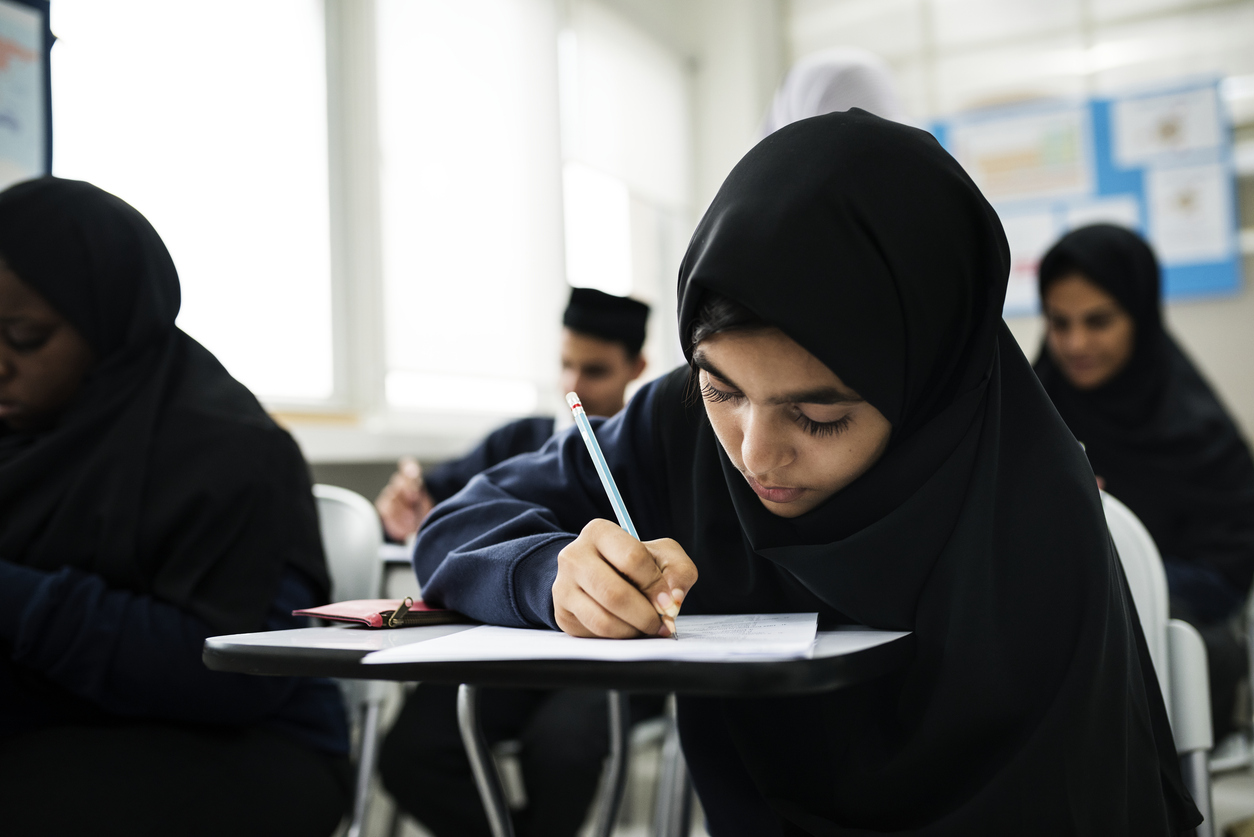
One of the indispensable contributions in order to live together, not only to exist together in diversity, is education. Education unites! (Bildung verbindet. L´enseignement unis. Vzdelanie spája.) Through education we can learn to combine identity and openness, traditions and modernity. Access and quality of education become a factor of integration. School, loyal to traditional Jan Amos Comenius´ call to be worhshop of humanity (dílna lidskosti), should give the new generations more intercultural skills and competences. Mentally, not geographically, we need to get our schools into Europe and Europe into schools.
Although 2008 is especially devoted to it, intercultural dialogue is a long–term priority for the EU; it is a cross–cutting issue with implications both within and without our borders. Inter–religious dialogue is an important aspect of our drive to promote intercultural dialogue; and it has been so for a long time. People of faith can help us spread our message of peace and reconciliation among peoples. They can support us in our fight to affirm human dignity as a non–negotiable public value. This is the first value we have listed together 60 years ago in the Universal Declaration of the Human Rights.
Ladies and Gentlemen,
The achievements of the European project over the past half century prove that we can live together—and thrive—not in spite of our diversity, but because of it. And this is also a key universal principle: we are all different, everybody is unique and original, but we all are equal in dignity.
I believe this is one important feature of the European project that can inspire others around the world. From young people in China one can often hear today comparisons of the European model with the old Confuthian ideal of harmony in differences. Europe’s success depends on our ability to draw on the intelligence and wisdom of everyone in our communities. And, of course, this applies to the insight and wisdom of our religious traditions as well. People of faith have a lot to say about the future of Europe; they can help us foster democracy, fight for our environment and heritage, and protect the dignity of the human person.
We should all feel the promotion of a pluralistic society as our individual responsibility. Let me make this point clear:
In our modern democracies, the real debate is not the one between believers and non–believers.
The real debate is about the precise sense we want to give to the term ‘pluralism’. Because preserving true meaning of the words is important for preserving human freedom.
There are countless views—of course—but I think we can all agree on one point: pluralism is a vision of the world that is not compatible with fanaticism and intolerance—both in its religious and secular varieties. In intercultural societies, we should recognise a plurality of beliefs, moral views and lifestyles as a fact of life. But everyone should profess—and practice—an unconditional respect for human dignity for all and everywhere.
This is where we draw the line that separates the people and views we are willing to invite to the dialogue and the views that are simply not admissible in the public arena. Dividing line in today’s world is not between cultures and between civilizations. It goes through them. (Hitler was born in Central Europe. Young Stalin started to study in the Tbilisi seminary.) This line marks relation to human person, to others, to life. On one side is respect, and on the other is fanaticism of any sort. Through intercultural dialogue and education we should open awareness and promote respect to human dignity and, at the same time, eliminate space for militant fanaticism and xenophobia.
Ladies and Gentlemen,
Decisive factor for our individual and common future and for our human relations is dominance of openness. Openness must combine the both – the mind and the heart. Open-mindedness brings rational, logical, competent approach. Open-heartedness promotes empathy, sympathy, solidarity with others. I wish the Forum 2000 to stay actively open for the needs of mankind today, open for humanity.
Thank you.
Related posts:
 EPP-ED Hearing on Cultural Diversity, Religions and Dialogue
 European Values in the light of the EYICD 2008
 Ján Figeľ: Religious freedom is a litmus test of all human rights
 European identity, intercultural dialogue, and religions
 Cultural Diversity in the EU: A Legacy from the Past, an Asset for the Future
 The future of European Higher Education beyond 2010